
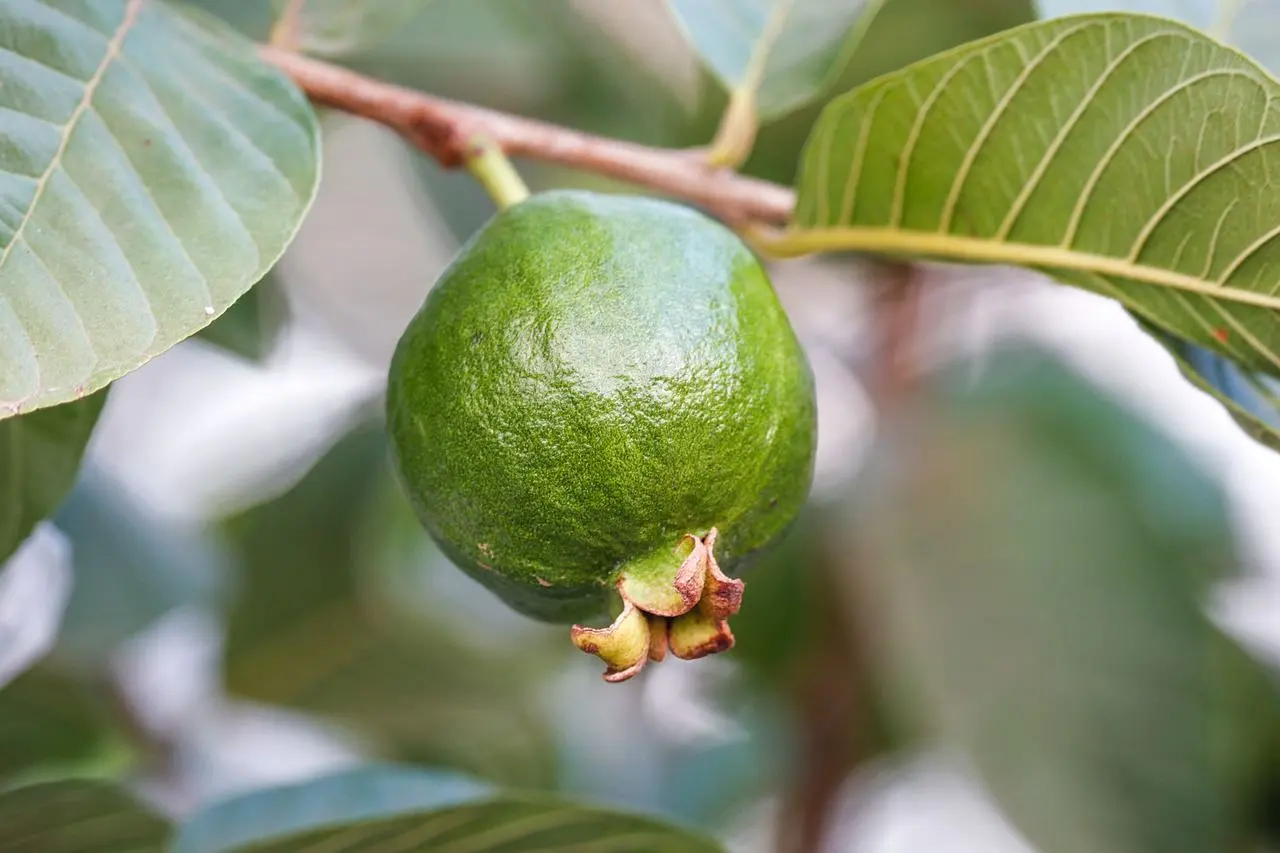
Wondering how to grow guava where winters can turn cold? Choose a warm, sunny spot that doesn’t flood, plant a container tree, mulch it, and prune lightly each year. Fruit follows in a few years.
| Item | Value |
|---|---|
| Ideal temperature for productivity | 73-82 degrees Fahrenheit |
| Height to aim for with light annual pruning | eight feet or shorter |
| Nursery tree to look for | two to four feet tall, in a three-gallon container |
| Mulch depth | two to six inches |
| Mulch distance from the trunk | eight to 12 inches |
| When to start looking for fruit | once the tree is three to four years old |
These figures come from UF/IFAS Gardening Solutions: Guava, a Florida extension page. Recommendations can change, so check the source before you rely on them.
Choosing a guava type
Guava (Psidium guajava) is native to the tropical Americas and is a popular fruit in Florida for both commercial and home growers, according to UF/IFAS. It grows as a small tree with a single trunk or several. Fruits range from only an ounce to three pounds.
Most guavas grown in Florida fall into one of two groups: a pink or red type that is harvested when ripe, and a white type that is eaten while still unripe. Peel colors run from green to yellow, and the flesh can be white, yellow, pink, or red. Some cultivars are quite acidic, while others are sweet.
- Pink cultivars: ‘Homestead’ (Ruby x Supreme), ‘Barbi Pink’, ‘Blitch’, ‘Hong Kong Pink’, and ‘Patillo’.
- Green varieties: ‘Crystal’, ‘Lotus’, ‘Supreme’, and ‘Webber’.
A separate guide covers the types of guava in more detail. If you are still deciding what else suits a warm yard, browse these tropical fruit trees for home gardens.
Climate and the right spot
Guava is most productive between 73-82 degrees Fahrenheit, and growth slows when temperatures dip below 60 degrees Fahrenheit. Mature trees can survive short periods of freezing weather, but damage may occur if a freeze is prolonged or temperatures reach 25 degrees Fahrenheit. Young trees can die if they experience temperatures lower than 28 degrees Fahrenheit, per UF/IFAS.
That makes the planting site the first big decision. Use this checklist when you walk the yard:
- Pick the warmest part of the landscape, because the lowest areas are typically the coldest.
- Choose a location with full sun.
- Avoid areas that flood consistently, although guava tolerates short durations of flooding.
- Expect moderate tolerance of drought, wind, and salt.
In a flood-prone area, planting on a mound can help the tree survive. The advice comes from Florida, where the tree suits any spot that doesn’t see prolonged freezes or waterlogged soils, so check your own winter lows before you buy.
Buying and planting a guava tree
Guava can be propagated from seed, but UF/IFAS advises against it: the tree won’t be “true” to its parent, and fruit may not begin for years. If you still want to experiment, a separate walkthrough explains how to grow guava from seed.
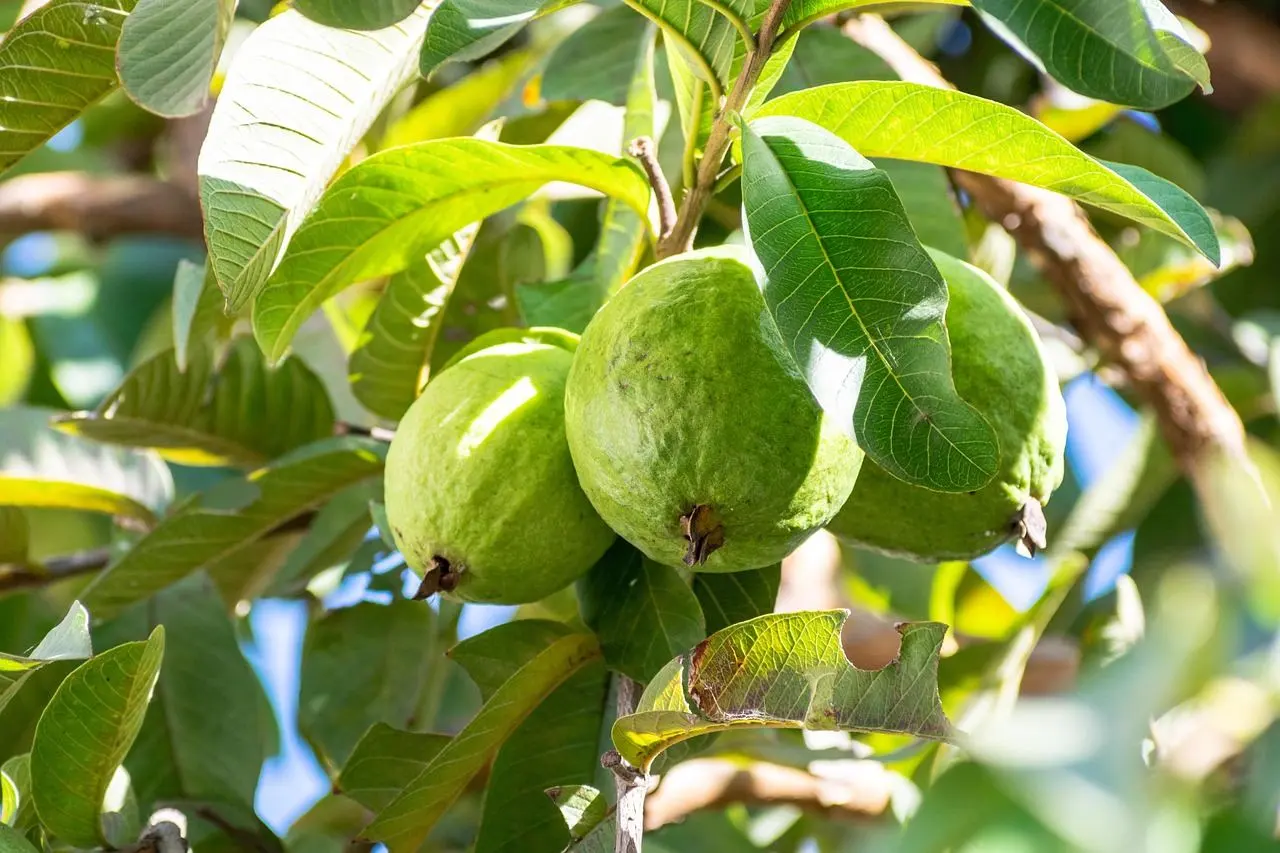
Commercial growers propagate by air layering, stem cuttings, or grafting. Home growers should buy a container tree. At the nursery, look for a healthy tree two to four feet tall in a three-gallon container.
Beware large trees in small containers. They are likely root bound, and a compacted root system is less likely to produce a healthy tree.
Planting steps
- Dig a hole three to four times the diameter of the container and three times as deep.
- Backfill with some of the removed soil, so the tree’s soil line sits at or slightly above the surrounding ground.
- Take the tree out of its container, set it in the hole, and fill the rest of the space with the excavated soil.
- Tamp the soil lightly around the roots and irrigate right away.
No yard? A separate guide explains growing guava in a pot.
Caring for the tree after planting
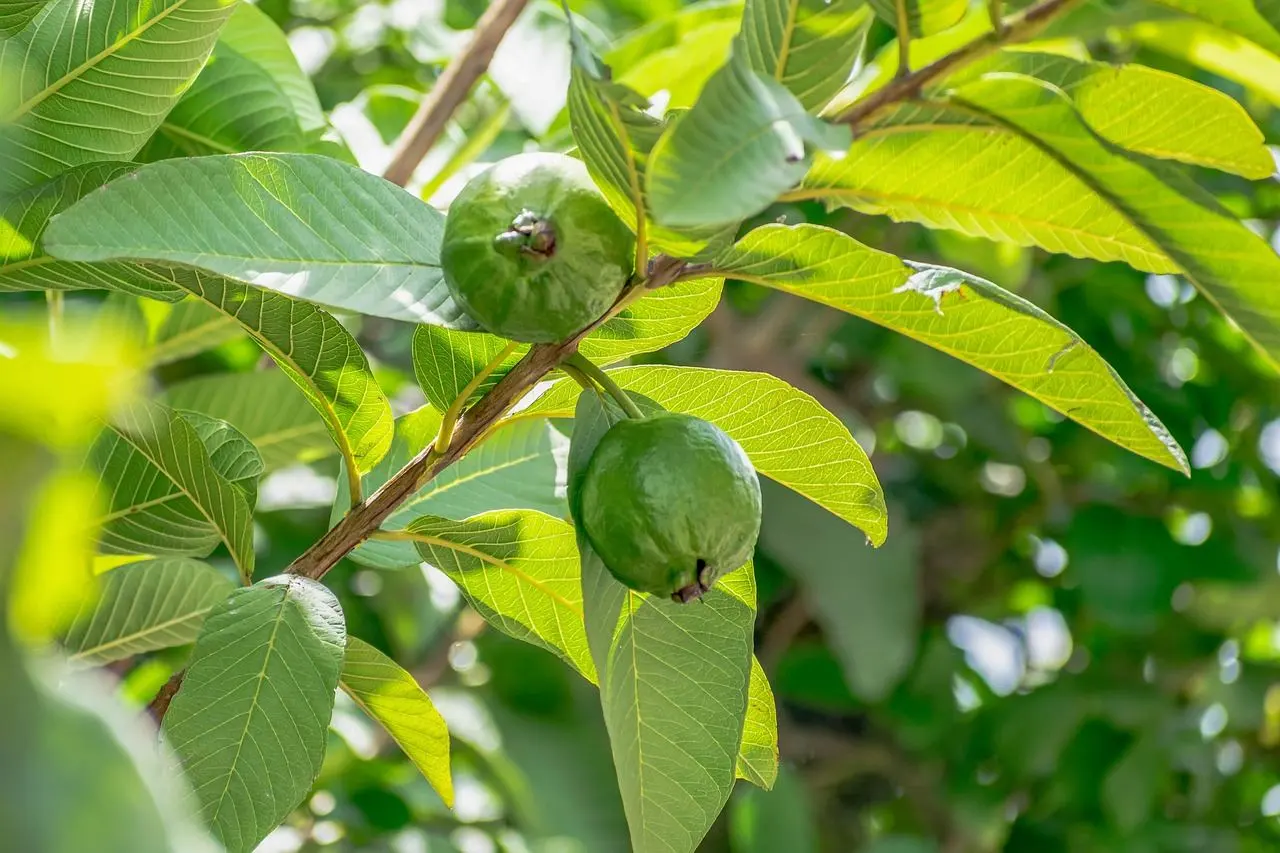
Finish planting with a layer of mulch two to six inches deep. It helps retain soil moisture, reduces weeds, and improves soil structure. Keep it eight to 12 inches away from the trunk, as UF/IFAS recommends.
Leave a grass-free area at least two feet from the trunk. Mowers, edgers, fertilizer, and irrigation meant for the lawn can harm a guava tree. Roots can extend beyond the drip line, so avoid heavy watering or fertilizing near the tree.
For a month-by-month routine, UF/IFAS points to its publication “Guava Growing in the Florida Home Landscape,” where tables 2 and 3 list the actions for each month of the year.
Keeping the size manageable
An unpruned guava can reach as tall as 20 feet. Light annual pruning is recommended to hold it at eight feet or shorter, according to UF/IFAS. A separate guide explains how to prune a guava tree step by step.
Pests and diseases
Guava has its share of problems. Pests to watch for include:
- Caribbean fruit fly
- Guava whitefly
- Red-banded thrips
- Guava fruit moth
- Scales
Possible diseases are anthracnose, red alga, and various leaf spots. If you see signs of trouble, contact your county Extension office for advice. The guide to guava tree pests and diseases goes deeper, and leaf color changes are covered on the page about guava tree yellow leaves.
When will your guava fruit, and when is it ripe?
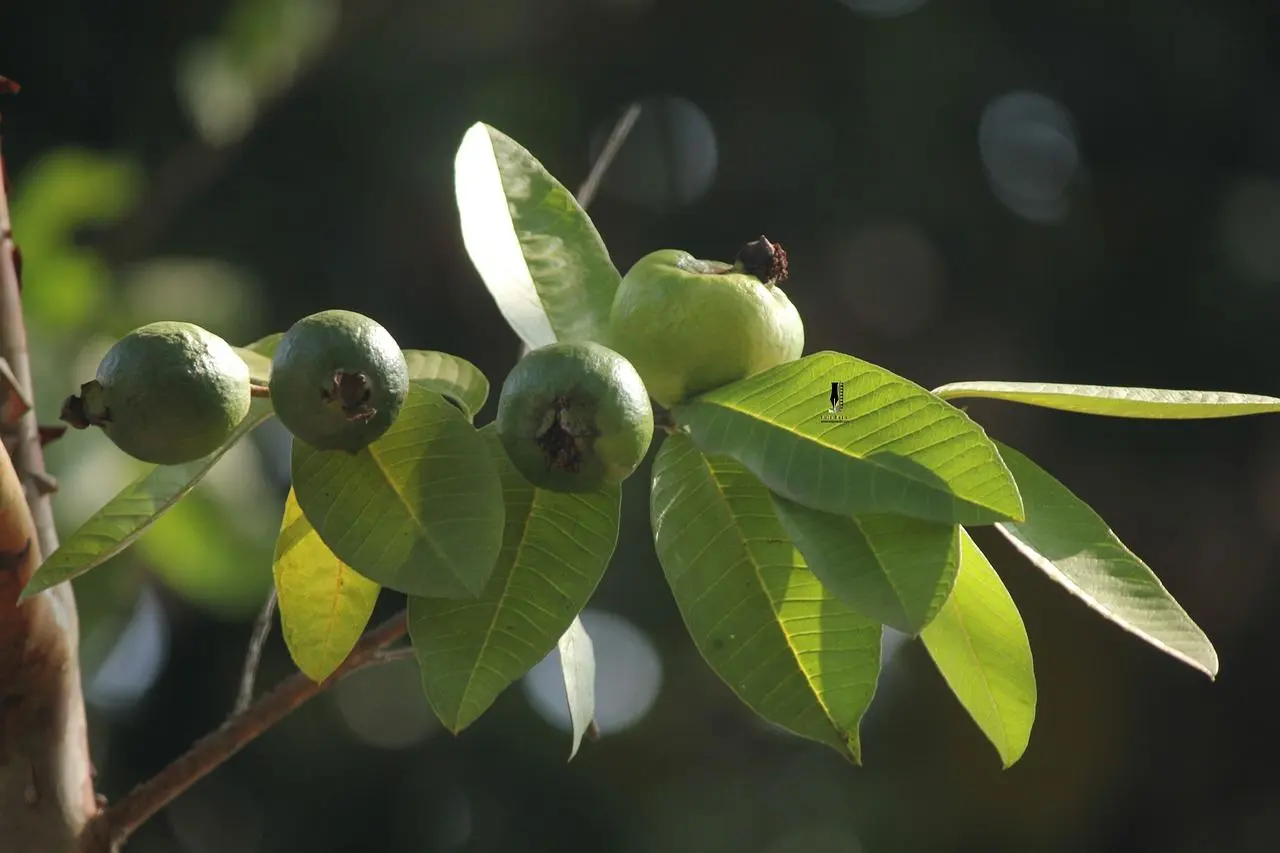
Start looking for fruit once the tree reaches three to four years old. The main crop typically arrives in summer, with a smaller one in early spring, per UF/IFAS. If an older tree stays bare, a separate page tackles the question why is my guava tree not fruiting.
Ripeness depends on the type:
- Pink or red guava is ready to pick when the peel turns light green to yellow. Leave it at room temperature until fully ripened.
- White guava is ready when it is green to light green. No ripening is needed, because it is eaten before that stage.
A separate guide explains when is guava ripe in more detail. When the harvest arrives, browse these guava recipes for ideas.
Frequently asked questions
Does a newly planted guava need a stake?
Show answer
Not necessarily. UF/IFAS calls staking unnecessary, but if you choose to use one, tie the tree with a natural material.
Can I add compost to the planting hole?
Show answer
Yes, with a limit. Topsoil or compost should be blended with the soil you dug out at a ratio no higher than 1:1, according to UF/IFAS.
How long can ripe guava be kept in the fridge?
Show answer
Chilling is for fruit that has already ripened. UF/IFAS says it can then be refrigerated for up to a week.
Is guava considered invasive?
Show answer
The Gardening Solutions guava page carries a Status Change note. It says guava was reassessed and is listed as a “caution” plant for Central and South Florida in the UF/IFAS Assessment of Non-native Plants in Florida’s Natural Areas. That does not label it invasive; it means the tree should be managed so it doesn’t escape the landscape.