
Why is my guava tree not fruiting after all your care? Usually it’s age, cold, shade or missing pollination. You can often fix it by checking those first.
This guide sits within our wider look at how to grow guava, which is the place to go for the full picture of planting and care.
| Item | Value |
|---|---|
| Best growing temperature | 23 to 28°C (73-82°F) |
| Temperature that can stop fruiting | Below 15°C (60°F) |
| Time to first fruit from seed | 3 to 8 years |
| Preferred soil pH | 4.5-7 |
| Spacing from other trees and buildings | 4.5-7.5 m (15-25 ft) |
| Hardiness zones for outdoor growing | U.S. zones 9 to 11 |
These figures come from Penn State’s PlantVillage guava page and Gardening Know How. They can change, so check the sources before you rely on them.
How old does a guava tree need to be before it fruits?
Rule out tree age first. Gardening Know How says guavas will not bear fruit until their third year, whether they were grown from seed or grafted.
Seed-grown trees can take longer. PlantVillage says they can take anywhere from 3 to 8 years to reach production, and that trees grown for fresh fruit are usually propagated by air layering or budding.
So a tree you raised from a saved seed may sit at the slow end of that range. A tree bought as a grafted or layered plant is the one to question sooner.
Cold and heat: when temperature stops fruit
Guava is a tropical plant, and temperature is a common reason for a bare tree. PlantVillage says it grows best between 23 and 28°C (73-82°F), and that temperatures below 15°C (60°F) can make the tree cease producing fruit.
Gardening Know How adds that guavas are very frost tender, cannot tolerate too much heat, and suit U.S. hardiness zones 9 to 11. Three temperature patterns are worth checking:
- A long cool season that keeps the tree below its comfortable range.
- Frost or cold wind hitting an exposed site.
- Strong heat on a spot with no relief.
The same guide recommends a site sheltered from cold winds or frosts, in full to partial sun.
Sunlight, spacing and pruning
Guava wants light. Gardening Know How says guava plants need full sun to part shade to grow, so a tree that has been swallowed by a neighbor’s canopy is a prime suspect.
PlantVillage advises planting in full sun and spacing trees 4.5-7.5 m (15-25 ft) from other trees and buildings to prevent shading. It also says established trees should be pruned to keep a manageable height and to open out the canopy.
If your tree has grown dense and tall, thinning the canopy lets light reach more of the branches.
Soil, water and feeding
Guava is flexible about soil. PlantVillage says it prefers a pH of 4.5-7 but tolerates alkaline soil up to pH 8.5, in sandy, rocky or loamy ground.
Gardening Know How asks for well-draining soil amended with plenty of compost. It also treats steady fertilization and irrigation as the baseline before you look for other causes.
Watering mistakes can go either way. Guava is more resistant to drought than most tropical fruits and can stop vegetative growth during long dry spells, so a stressed tree may simply be holding still. Newly planted trees need more attention, with watering every two days for the first week and then weekly for the following few months, according to PlantVillage.
- Mulch helps retain moisture, suppress weeds and nourish roots.
- Weed gently, because the tree has a shallow root system.
- Feed young trees according to your area and soil type, since the right product and amount vary.
If the leaves are also changing color, read the guide on guava tree yellow leaves alongside this one.
Pollination: does your tree need help?
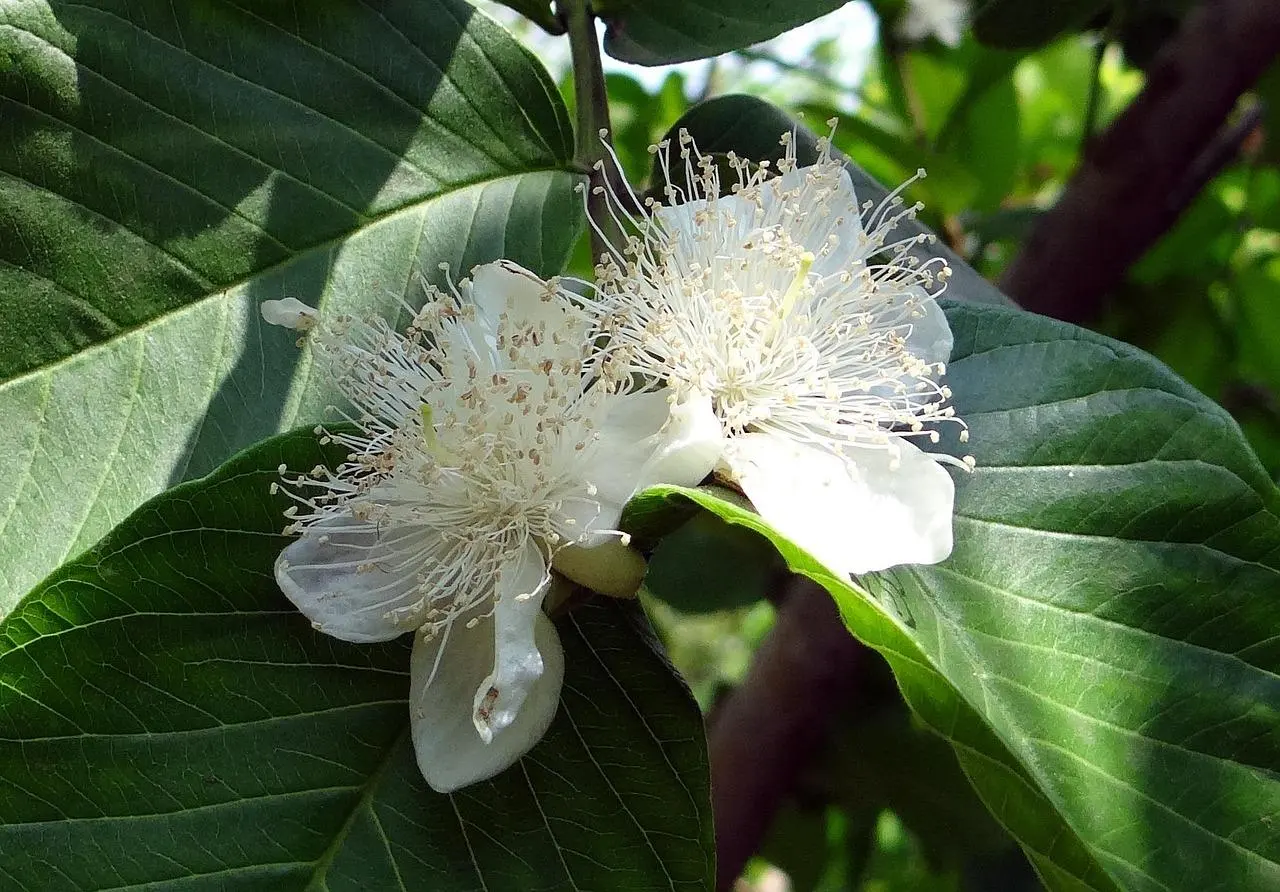
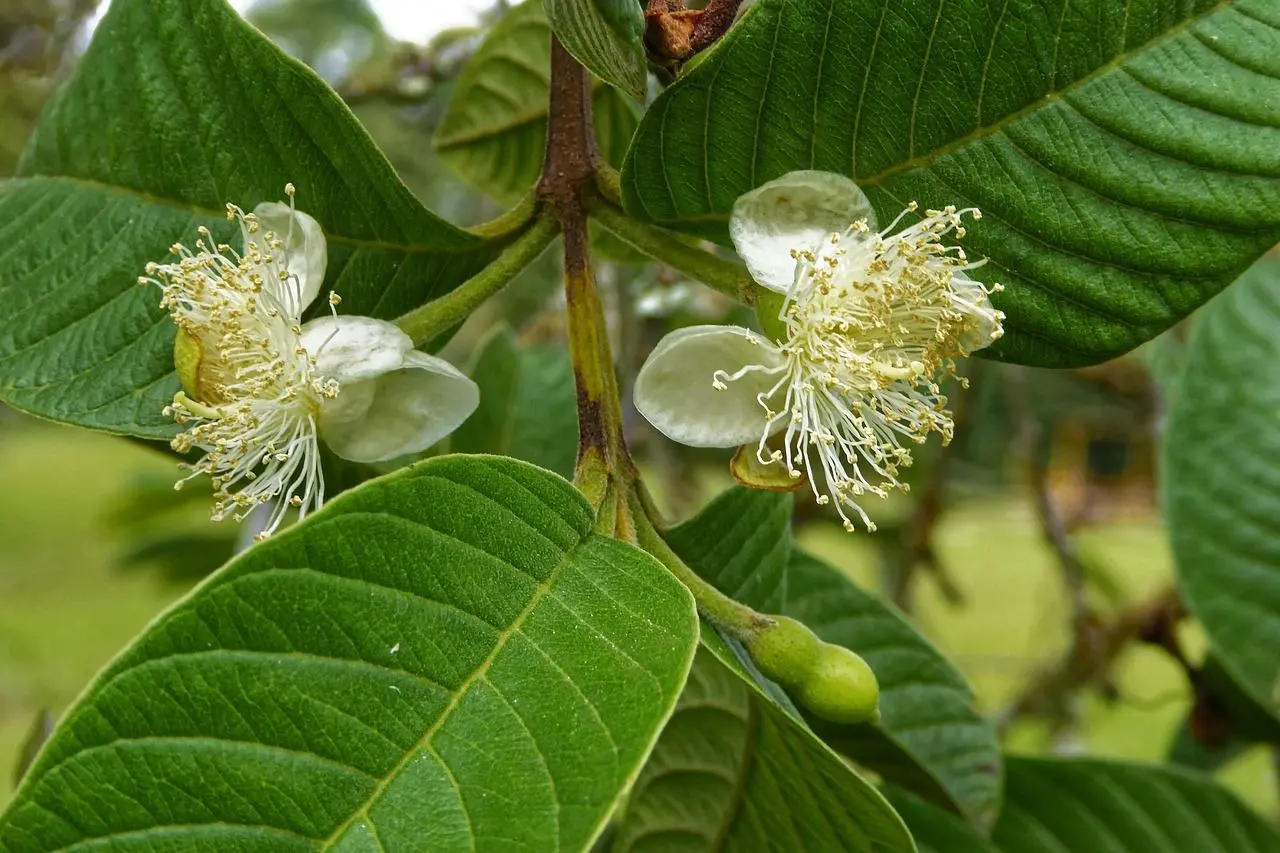
A tree can flower and still set little fruit. Gardening Know How lists pollination as a possible cause and says apple guava, Psidium guajava, needs either a partner tree to cross-pollinate with or hand pollination from you.
The same page says pineapple guava, Feijoa sellowiana, is more likely to bear fruit when hand pollinated. That is a different species from common guava, so check which one you actually own.
A quick checklist to work through
Work down this list in order, changing one thing at a time so you can tell what helped:
- Confirm how old the tree is and how it was propagated.
- Look back over your coldest weeks and your site’s exposure to frost and wind.
- Check what grows around it and whether it gets full sun.
- Test the soil pH and watch how the ground drains after rain.
- Consider hand pollination, or a second tree if you have the room.
If the tree flowers but the fruit or leaves show spots, lesions or insects, the guide to guava tree pests and diseases covers that separate problem.
Frequently asked questions
Can a potted guava tree fruit?
Show answer
Yes, a container is an option if it has room and drainage. Gardening Know How suggests a pot at least a foot (31 cm) across, with good drainage holes.
Does a cold winter affect fruiting?
Show answer
It can. PlantVillage says established trees can survive brief cold snaps, yet a tree kept cool may stop producing until the weather warms.
Do I need two guava trees?
Show answer
A single tree may still work, but per Gardening Know How it then depends on you to help with hand pollination.
Should I prune a guava tree that won’t fruit?
Show answer
Pruning in PlantVillage’s advice is about shape: young trees are cut back to encourage lateral branches. The page does not present it as a cure for missing fruit, so treat it as upkeep.