
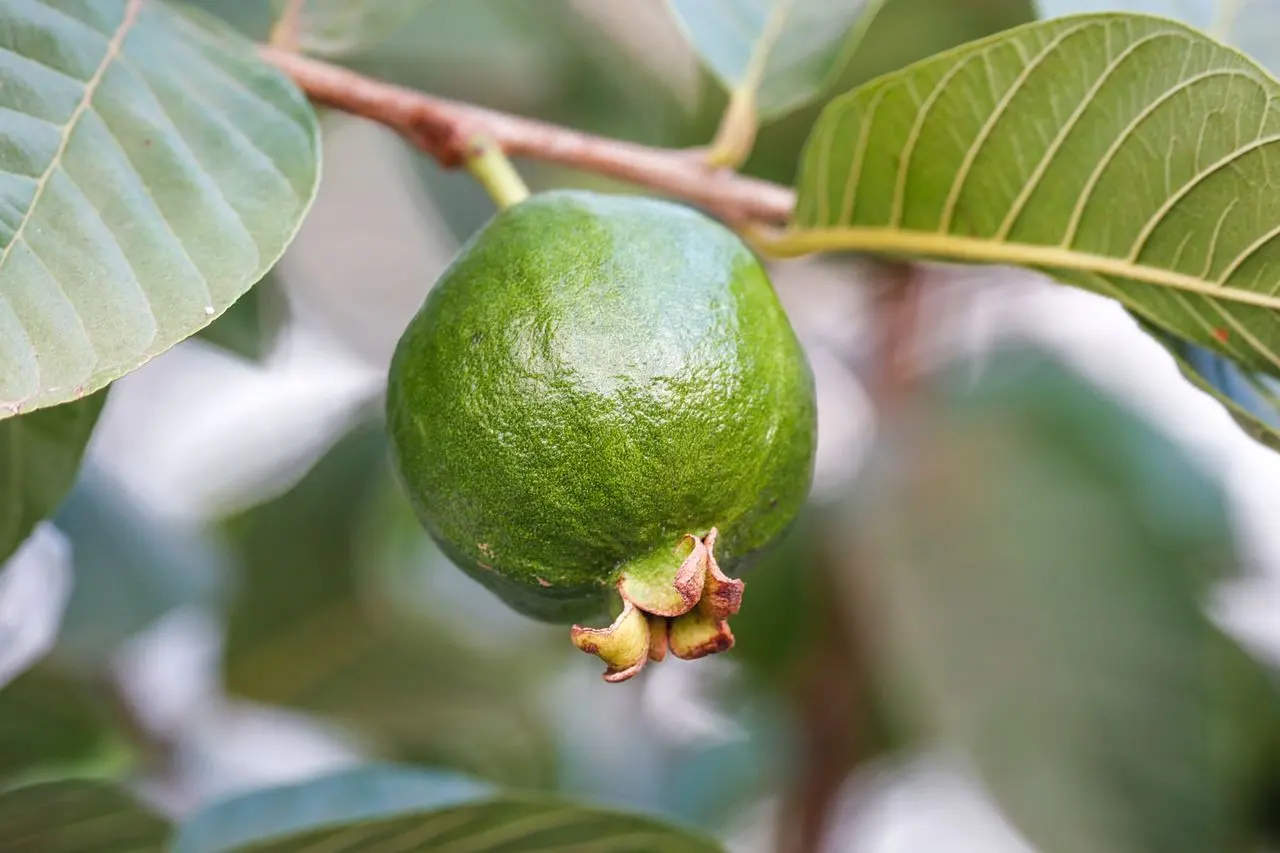
Sorting through the types of guava is easier once you know how you want to eat the fruit. Pink-pulp kinds are eaten ripe, while white-pulp kinds are eaten crisp and unripe.
Before you pick a variety, it helps to read the overview on how to grow guava, then come back here to compare fruit.
| Item | Value |
|---|---|
| Basic guava types grown in Florida | 2 types |
| Large-fruited cultivars suggested when fruit is bagged | 10 cultivars |
| Genotypes compared in an Indian field study | 47 genotypes |
| Average fruit weight range across those genotypes | 65 to 281 g |
| Seed content range across those genotypes | 1.21 to 3.26 g |
These figures come from the University of Florida extension guide to guava varieties and a 2012 FAO AGRIS record of an Indian variability study. They can change, so check the sources before you rely on them.
The two basic guava types
Growers in Florida work with two basic types: pink or red pulp types eaten when ripe, and white pulp types eaten when non-ripe, either green or crispy. That split comes from the University of Florida variety guide, and it is the most useful first filter for any home grower.
Beyond that split, the same guide notes that there are numerous varieties from Latin America, India, Southeast Asia, Mexico, and the US (Florida, Hawaii, and Puerto Rico). Some less popular varieties may be hard to find in local nurseries, so the name on a plant tag matters.
Pink-pulp varieties for eating ripe
The University of Florida guide lists these pink types as available:
- Homestead (Ruby x Supreme): pink flesh, sweet flavor.
- Hong Kong Pink: pink flesh, sweet flavor.
- Patillo: pink flesh, subacid and mild.
- Blitch: light pink flesh, tart but pleasant.
- Barbi Pink: named as a pink type, with no flavor notes in the guide.
The guide also lists a variety called Ruby, with red flesh and a mild, sweet flavor. If you like a sweeter fruit, Homestead and Hong Kong Pink are the two the guide describes as sweet.
White-pulp varieties for eating crisp
White-pulp guavas are picked and eaten while still green and crunchy. The University of Florida guide names Crystal, Lotus, Supreme and Webber as green types.
Crystal, Lotus and Asian White all share the same description in the guide: white flesh, mildly sweet, eaten immature, with a crunchy texture. Supreme is also white but described as mild and sub-acid.
Webber is a small puzzle. The guide groups it with the green types, yet its flesh colour is listed as yellow with a sweet flavor, and a Webber x Supreme cross is listed as white and sweet.
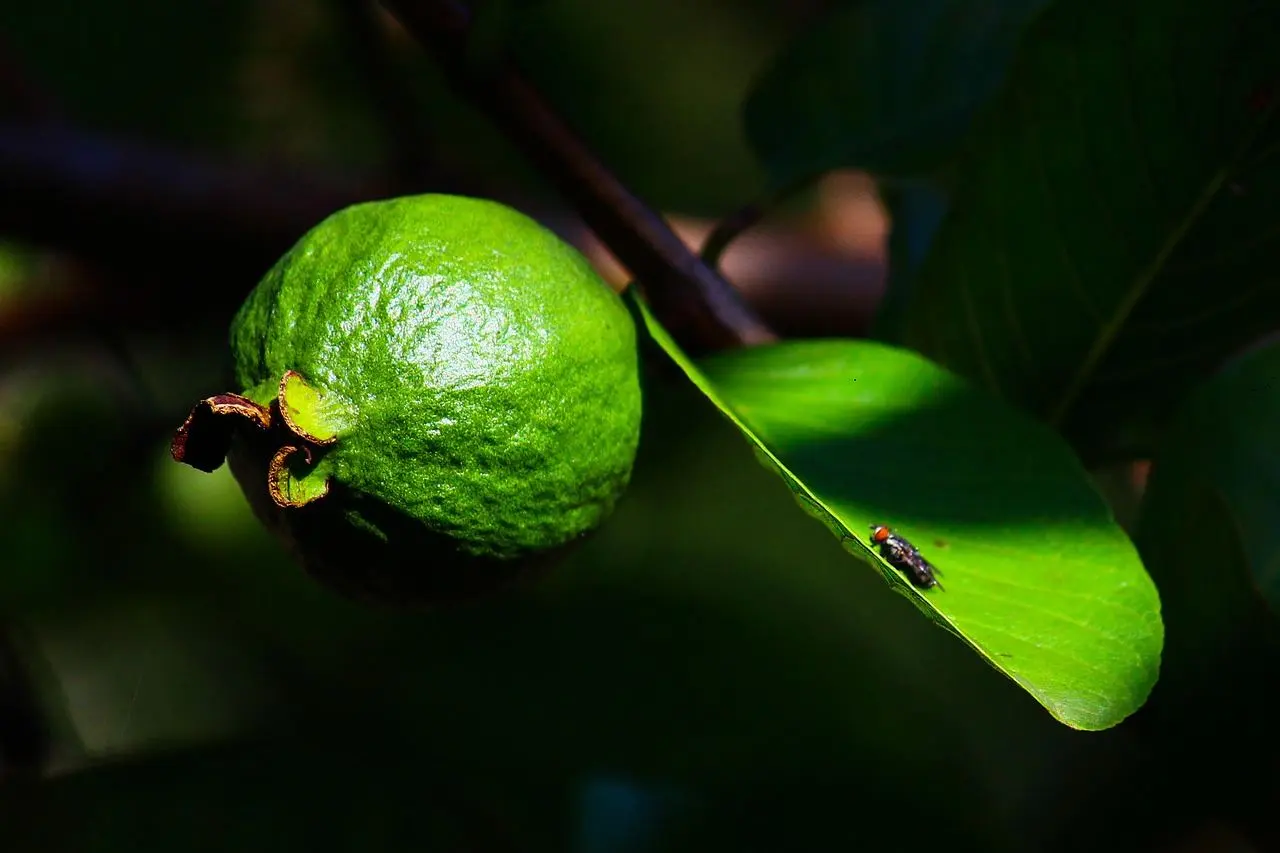
Which varieties suit a home garden?
The same guide marks each variety as recommended or not for home planting, noting that some may be difficult to find in the nursery trade. Those marked as recommended are:
- Patillo, Homestead and Hong Kong Pink among the pink types.
- Crystal, Lotus and Asian White among the white types.
Supreme, Ruby, Blitch, Webber and the Webber x Supreme cross are not marked as recommended for home planting in that table.
Fruit size matters too. Because the fruit must be bagged to protect it from the Caribbean fruit fly, the Florida extension guide favours 10 cultivars with large fruit: Thai Giant, White Indian, Hong Kong Pink, White Indonesian, Lucknow 49, Red Indian, Detwiler, Ruby x Supreme, Peruvian White and Supreme.
Because pink types are eaten ripe and white types unripe, picking time differs between them, and our page on when is guava ripe covers how to judge it. If space is tight, you can read about growing guava in a pot before choosing a variety.
How much do guava genotypes differ?
Named varieties are only part of the picture. In a study recorded in FAO AGRIS, researchers at Udaipur in India evaluated 47 genotypes of Psidium guajava and found a wide range in plant growth, yield and quality.
Average fruit weight ran from 65 to 281 g across those genotypes, and seed content from 1.21 to 3.26 g. Two genotypes were singled out as superior for yield and quality.
The takeaway for a home grower is that two plants sold as “guava” can produce very different fruit. Checking the variety name, rather than the species alone, is what lets you compare like with like.
Frequently asked questions
Does all guava have pink flesh?
Show answer
No. The Florida extension table lists white, light pink, pink, red and yellow flesh across its varieties, so colour depends on which one you plant.
Can you eat guava before it softens?
Show answer
With the white-pulp group, yes: those varieties are described as eaten when green or crispy. The pink and red group is the one meant for eating ripe.
Why are some guava varieties hard to buy?
Show answer
The extension guide says less popular varieties may be hard to find in local nurseries. Ask a nursery which named varieties it stocks before setting your heart on one.
Is a guava variety the same as a genotype?
Show answer
Not quite. A named variety is a recognised type sold under a name, while a genotype in a research collection may simply be a numbered selection that is being evaluated for traits.