
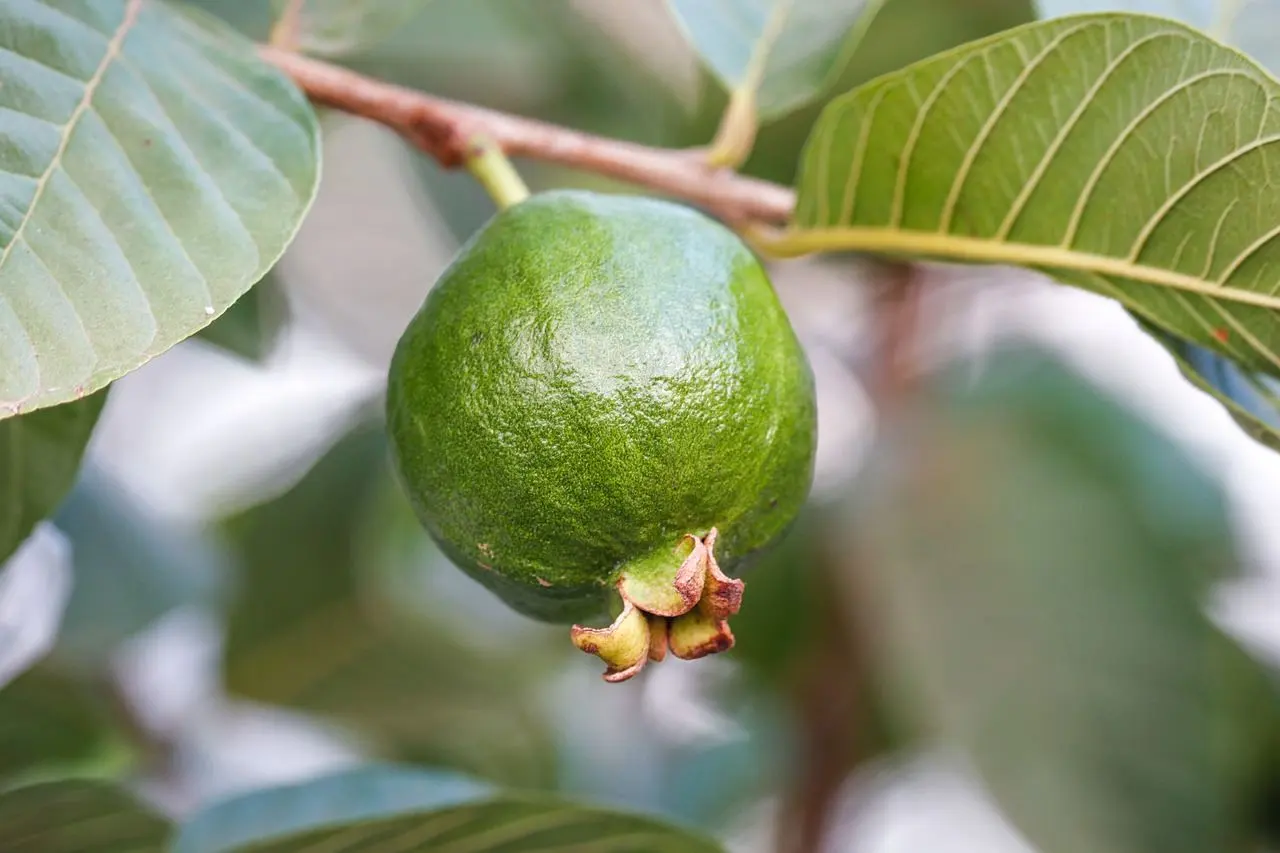
Wondering how to grow guava from seed? Sow seeds from a healthy tree shallowly in sandy soil, keep them warm and be patient. Seedlings sprout in a few weeks, but fruit from seed can take years.
For the wider picture, read the main guide on how to grow guava.
| Item | Value |
|---|---|
| Seed planting depth | 6 mm (0.25 in) |
| Typical germination time | 15 to 20 days |
| Seedling height for moving to individual pots | 3.8 cm (1.5 in) |
| Time until seedlings are ready for the field | 6 to 7 months, at about 30.5 cm (12 in) tall |
| Seedlings that keep the parent’s traits | approximately 70% |
| Time to first crop from seed | 3 to 8 years |
These figures come from PlantVillage (Penn State). They can change, so check the source before you rely on them.
Is growing guava from seed worth the wait?
Seed is the cheapest way to get a guava tree, but the result is a gamble. The UF/IFAS Gardening Solutions guide says seed propagation is not recommended because the tree won’t be “true” to its parent and fruit may not begin for years.
PlantVillage is more encouraging for fruit grown for processing. It reports that approximately 70% of seedlings keep the parent tree’s genetic characteristics, and that trees grown from seed may not produce for 3 to 8 years, as PlantVillage explains.
Growers of fresh fruit usually skip seed. They propagate by air layering or budding, and the Florida extension advice for home growers is to buy a container tree, according to UF/IFAS.
Seed still makes sense in some cases:
- You enjoy the project and do not mind variable fruit.
- You can wait years for a first crop.
- You want a rootstock or a spare tree to experiment with.
What you need before you sow
Start with the seed itself. Plant only seeds from a healthy, vigorous tree with the traits you want, which is the advice given by PlantVillage.
Gather a few simple things before you begin:
- Seeds taken from a fruit of a healthy parent tree.
- Flats or pots filled with sandy soil.
- A warm spot, since the ideal temperature for productivity is 73-82 degrees Fahrenheit and growth slows below 60, per UF/IFAS.
- A future planting site in full sun.
Guava accepts a wide range of soils, including sandy and rocky ground and loams. It prefers a pH of 4.5-7 and tolerates alkaline soil, according to PlantVillage.
How to sow guava seeds step by step
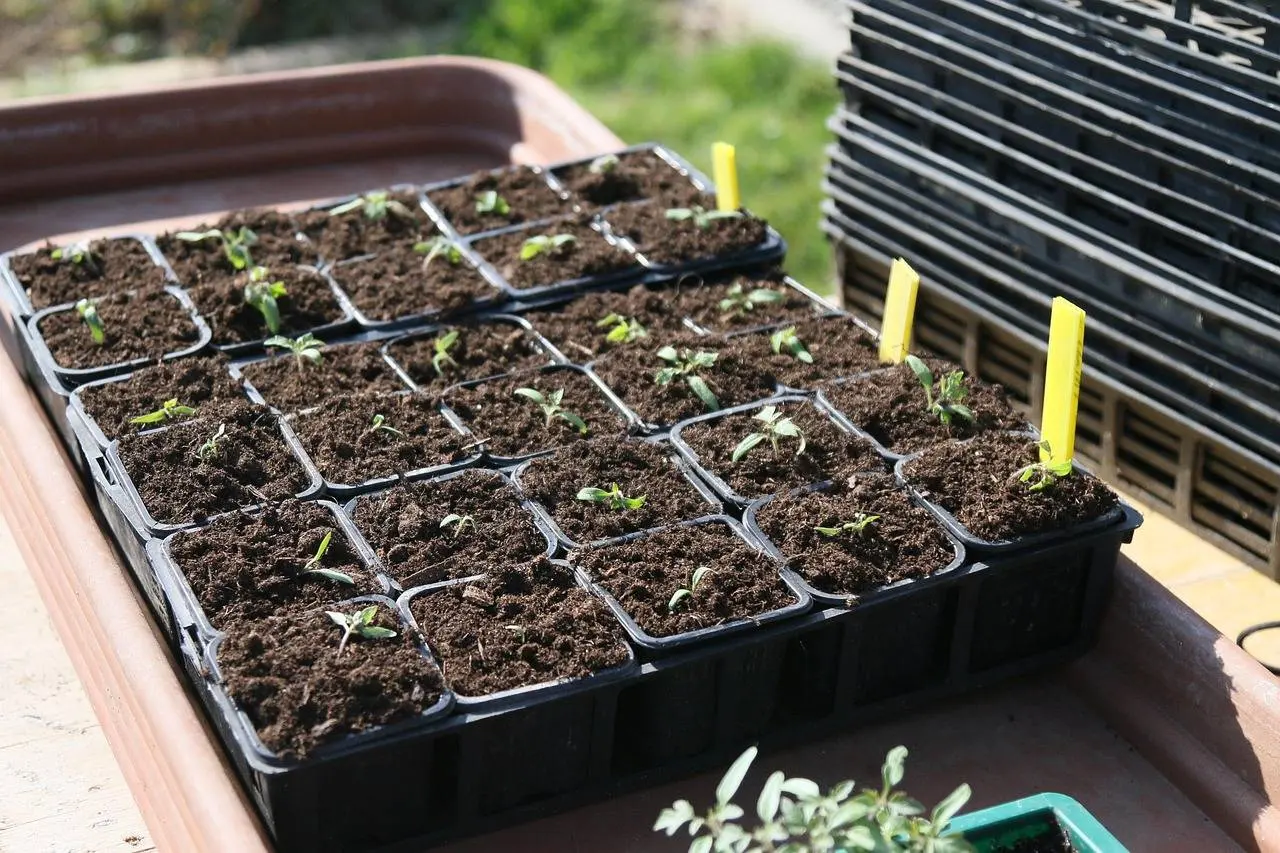
PlantVillage notes that guava seeds are usually started in nursery beds or pots and transplanted later. Follow this order:
- Fill flats or pots with sandy soil.
- Scatter the seeds and cover them lightly.
- Keep the container warm and wait for shoots.
- When the seedlings are big enough to handle, move each into its own pot.
- Grow them on until they are sturdy enough for the garden.
The numbers behind those steps are small. Cover seeds to a depth of 6 mm (0.25 in), and expect germination within 15 to 20 days. Move seedlings into individual pots at 3.8 cm (1.5 in) tall, then plant them out after about 6 to 7 months, when they reach roughly 30.5 cm (12 in), as PlantVillage reports.
Caring for seedlings and planting them out
Choose a spot in full sun and leave room for the tree to spread. PlantVillage suggests spacing trees 4.5-7.5 m (15-25 ft) from other trees and buildings to prevent shading, as PlantVillage advises.
When you plant, work through these points:
- Dig a hole slightly larger than the root ball.
- Add a layer of compost or rotted manure at the bottom.
- Set the seedling upright at the same depth it grew in the pot.
- Backfill and tamp the soil by hand to remove air pockets.
- Water straight away unless the soil is already damp.
Water newly planted trees every two days for the first week, then once a week for the following few months. Spread organic mulch but leave a gap of 20 to 30 cm (8-10 in) between the trunk and the mulch, as PlantVillage recommends.
If you have no suitable garden bed, the guide to growing guava in a pot covers the container route.
Pruning, pests and waiting for fruit
Young trees are pruned to encourage side branches, or laterals. PlantVillage describes cutting existing laterals back at 30 to 60 cm (1 to 2 ft), as listed on PlantVillage. Our guide on how to prune a guava tree goes further.
UF/IFAS recommends light annual pruning to keep a tree at eight feet or shorter. It also lists the pests and diseases to watch for:
- Pests: Caribbean fruit fly, guava whitefly, red-banded thrips, guava fruit moth and scales.
- Diseases: anthracnose, red alga and various leaf spots.
If you notice signs of either, UF/IFAS advises contacting your county Extension office. Seed-grown trees are the slowest to crop, so treat the first years as growing time rather than harvest time.
Frequently asked questions
How long do guava seeds take to sprout?
Show answer
Plan on a wait of roughly 15 to 20 days from sowing before shoots show, according to PlantVillage. Keep the container warm in the meantime.
Will a seed-grown guava taste like its parent?
Show answer
Not reliably. UF/IFAS warns that a seedling won’t be “true”, while PlantVillage puts the share that keeps the parent’s characteristics at approximately 70% (UF/IFAS, PlantVillage).
How long until a seed-grown tree bears fruit?
Show answer
PlantVillage says the gap runs anywhere from 3 to 8 years for trees grown from seed. See PlantVillage for that range.