
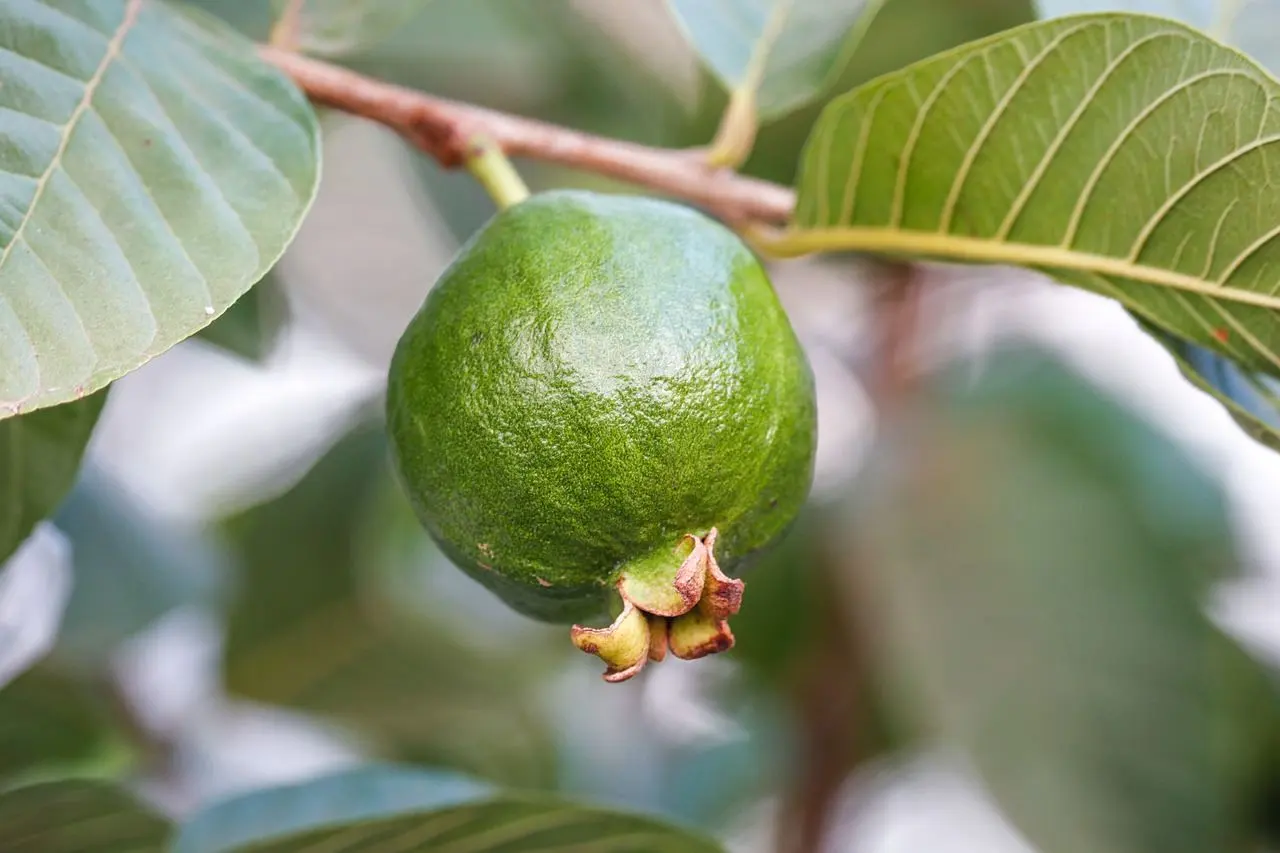
Not enough garden for a full guava tree? Growing guava in a pot works if you start with a container about 12 inches wide, use free-draining soil and give it 6-8 hours of sun.
For the full picture of planting and care in open ground, read the guide to how to grow guava.
| Item | Value |
|---|---|
| Starting pot size | About 12 inches wide |
| Preferred soil pH | 5.0-7.0 |
| Daily sunlight | At least 6-8 hours |
| Feeding | Monthly in spring and summer |
| Pruning for a compact tree | Early summer |
These figures come from Southeast AgNet and Four Winds Growers. Growing advice can change, so check the sources before you rely on the figures.
Does growing guava in a pot really work?
Yes, within limits. Common guava (Psidium guajava) is a tropical plant, and one grower reports that its native ag zones are 9-12, yet the same grower keeps two guava varieties in containers in Ag Zone 7b, according to Tyrant Farms.
In the ground, a tree can grow as tall as 30 feet in its native range, as Epic Gardening describes it. A pot keeps that in check, and Tyrant Farms says container plants can be trimmed back yearly after they fruit to stay small and manageable.
A pot also lets you move the plant. For a container tree that will spend winter indoors, Epic Gardening advises aiming for temperatures above 45°F, and preferably above 50°F, when you plant.
Pick a variety that suits a container
Several different fruits get called guava. Tyrant Farms notes that pineapple guava (feijoa) is not a true guava, so check the botanical name before you buy.
The same source suggests getting at least two varieties of common guava. The plants are technically self-fertile, but they are described as much more productive with another guava nearby. Two varieties that grower uses in pots are:
- ‘Peruvian white’: green young fruit that ripens to white or yellow, with white flesh.
- ‘Homestead’ (also sold as ‘Ruby Supreme’): large fruit with pink flesh when ripe.
If you want to compare more options, the guide to types of guava is a good next read.
Pot size and drainage
Begin with a modest container. Southeast AgNet suggests planting initially in a pot about 12 inches wide, then replanting into a slightly bigger one each year.
Drainage matters as much as size. Four Winds Growers says the pot should have lots of drainage holes to prevent waterlogging, which can harm the roots.
- Choose a pot about 12 inches wide for a young plant.
- Check that the base has plenty of drainage holes.
- Each year, move the tree into a slightly bigger container.
Soil mix and planting
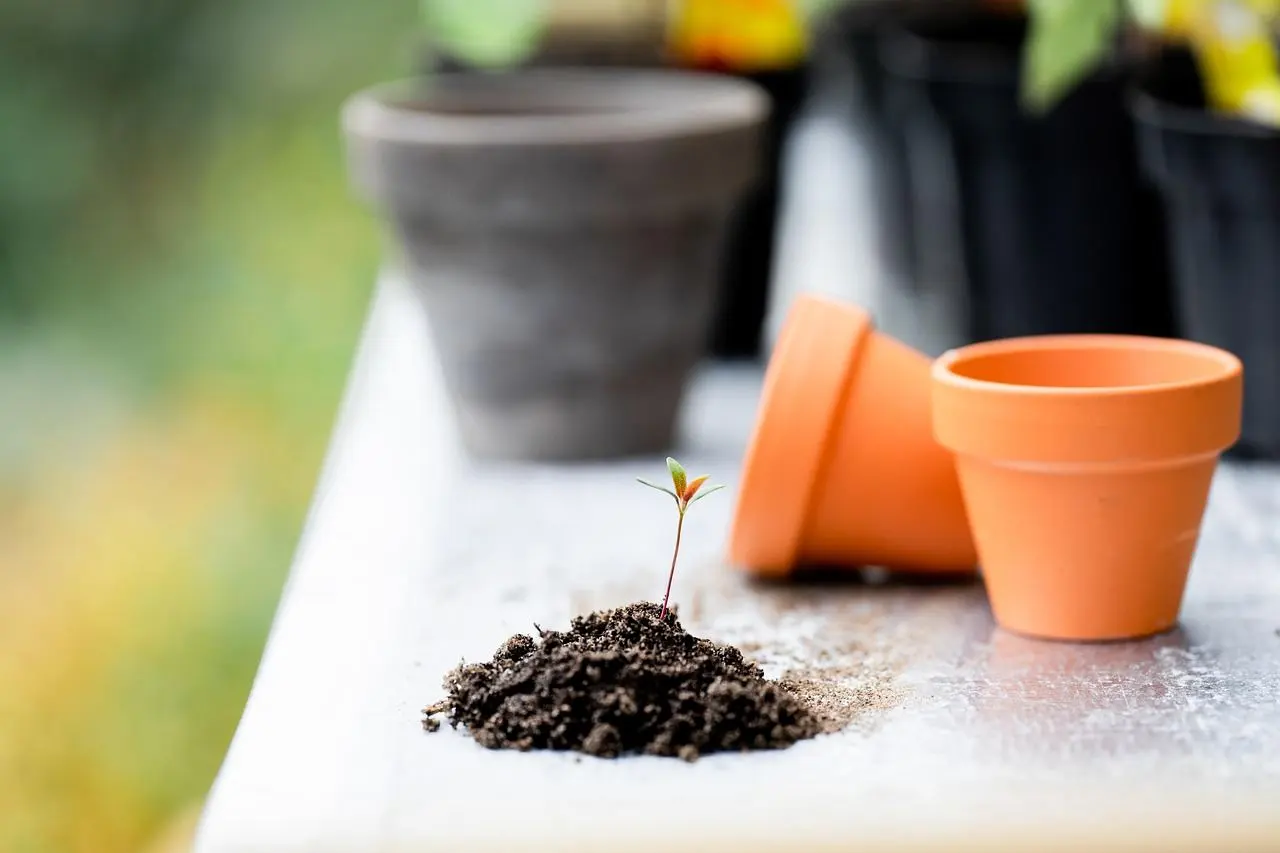
Four Winds Growers says guavas prefer well-draining soil that is slightly acidic to neutral, with a pH of 5.0-7.0. It also warns that soils high in salts can be problematic and should be avoided.
The same source offers a simple potting recipe:
- Garden soil
- Perlite for drainage
- Compost for body and nutrients
A good-quality commercial potting mix is another route, as Southeast AgNet points out. Set the young plant in the centre of the pot so the roots have room to spread.
If you would rather raise your own plant, the guide on how to grow guava from seed covers that route.
Light, water and feeding
Guava wants full sun. Four Winds Growers recommends at least 6-8 hours of sunlight daily, with protection from harsh midday sun in hotter climates to prevent leaf burn.
For watering, the same source says to water deeply when the top inch of soil feels dry and let the excess drain away. Southeast AgNet adds that a newly planted tree can be watered every other day, then once a week through its first year.
An organic mulch of leaves, hay, compost or grass clippings is also recommended by Southeast AgNet.
Feeding keeps a pot-bound tree going. The two sources agree on roughly monthly feeding:
- Four Winds Growers: a balanced fertilizer monthly during spring and summer, following the packet instructions and avoiding over-fertilizing.
- Southeast AgNet: guavas are heavy feeders, so use a well-balanced fertilizer or one slightly higher in nitrogen.
Pruning, pests and harvest
Pruning keeps the plant manageable. Southeast AgNet suggests pruning a container tree in early summer to keep it compact, and shaping it in a wine glass pattern.
Four Winds Growers adds that regular pruning encourages branching, and that dead or diseased branches should come out.
Watch for aphids, scale insects and fruit flies, and treat problems promptly with organic options such as insecticidal soap, according to the same source. Good air circulation helps prevent fungal diseases.
Patience is part of the deal: depending on the variety, a plant may need a year or two to mature and fruit. Fruit is ready when it gives off a sweet aroma and feels slightly soft under gentle pressure.
Frequently asked questions
How big a pot does a guava need?
Show answer
Start small and step up. A young plant does fine in a modest container, and Southeast AgNet recommends moving it into a slightly larger pot every year.
Can I grow guava in a pot if winters are cold?
Show answer
It is possible. Tyrant Farms grows tropical guavas in containers in Ag Zone 7b, and a pot lets you carry the plant indoors when cold weather arrives.
How long until a potted guava fruits?
Show answer
It varies by variety. Four Winds Growers says it may take a year or two before the plant matures and produces fruit.
Do I need more than one plant?
Show answer
One plant can set fruit, but Tyrant Farms reports better yields when a second guava grows close by.