
Worried you can’t grow tropical fruit trees in pots where winters freeze? You can: pick compact, forgiving types, give them a drained container, and move them indoors before cold arrives.
This page narrows the topic to containers; for the wider view, see the guide to tropical fruit trees for home gardens.
| Item | Value |
|---|---|
| Strawberry guava pot size | at least three gallons |
| Lemon pot size | three to ten gallons |
| Lemon minimum temperature | above 50°F (10°C) |
| Surinam cherry cold threat | below 20°F (-7°C) |
| Strawberry guava outdoor low | as low as 25°F (-4°C) |
| Soil surface below the rim | 1-4 in. (2-10 cm) |
These figures come from Epic Gardening’s guide to tropical fruits in containers and the Rare Fruit Council’s container guide. They can change, so check the sources before you rely on them.
Why grow tropical fruit trees in containers?
The main reason is portability. According to the Rare Fruit Council guide, tropical and subtropical fruits can be grown in containers in areas where freezes might occur, because the plant can be moved indoors when freezing weather is forecast.
Pots also suit gardeners with poor soil, an unsuitable climate or little room, as is often the case around apartments and condominiums. The same guide is frank about the trade-off: container plants will rarely be as attractive or grow and fruit as well as those grown under optimal conditions in the ground.
Which tropical fruits suit pots?
Epic Gardening’s list of tropical fruits for containers includes several that stay manageable in a large pot:
- Strawberry guava: a close relative of the common guava, smaller and producing many small fruits.
- Lemon: choose a dwarf variety; it brings evergreen foliage and sweet-scented flowers indoors.
- Lime: similar habits to lemon, with options such as Key limes that produce small limes with a distinctive flavour.
- Surinam cherry: a South American shrub with lobed, star-shaped red fruits that taste sweet with notes of citrus.
Strawberry guava is more forgiving than many citrus and tolerates lower light and varying soil moisture, according to the same source. Most varieties produce deep pink fruits the size of golf balls, though yellow cultivars exist.
One caution applies to strawberry guava. After its introduction to Hawaii 200 years ago, it began choking out native vegetation and remains one of the most problematic invasive species on the islands, as Epic Gardening notes. The same source says it is unlikely to become a problem when grown in a container in a temperate climate.
A separate page explains how to grow lychee for readers who want to try that fruit.
Choosing the pot and potting mix
Size matters more than style. Epic Gardening suggests a pot of at least three gallons for strawberry guava and for limes, and three to ten gallons for lemons.
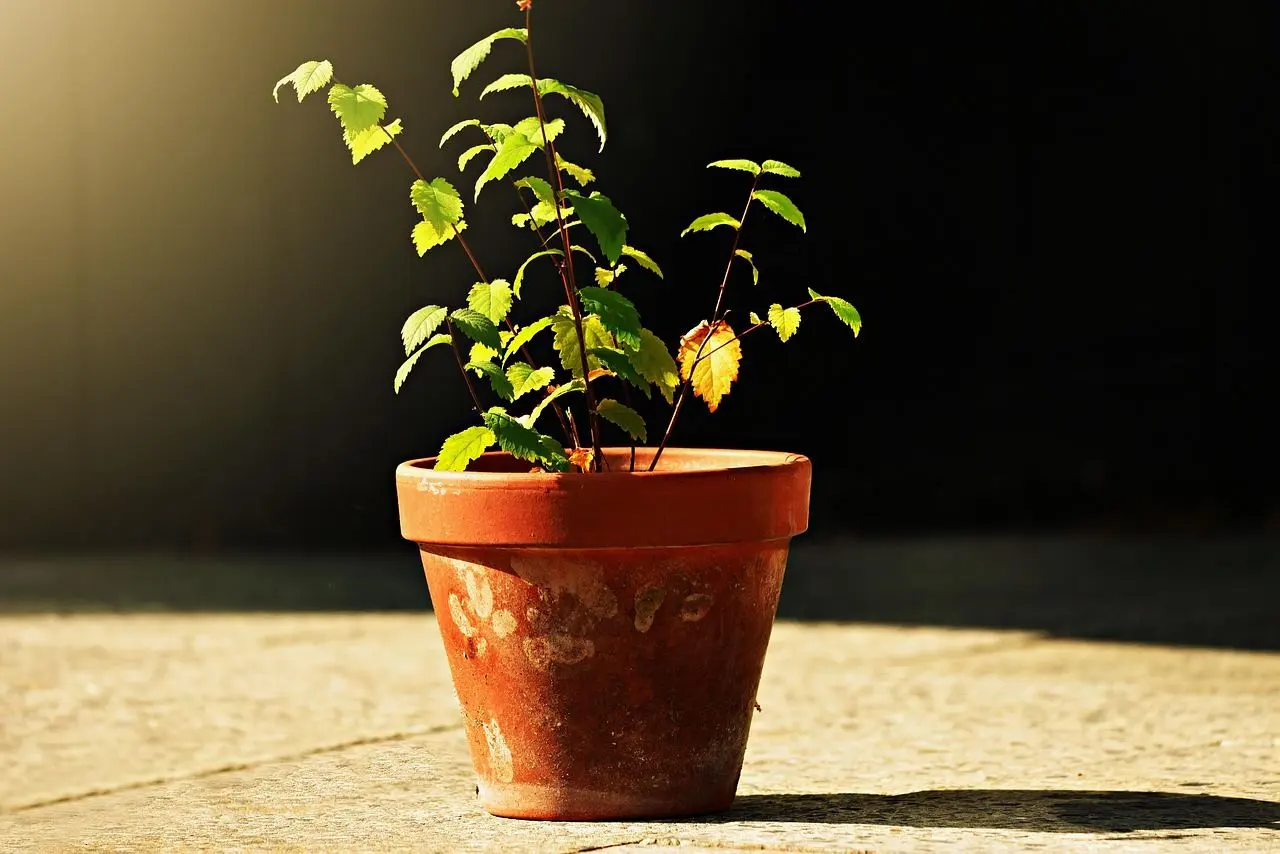
The Rare Fruit Council guide says containers may be plastic, metal, clay, ceramic, wood or anything else sold at nurseries, with half whisky barrels called excellent. Whatever you choose, it needs drainage holes at the bottom for excess water.
For the mix, any commercial potting soil should suit fruit trees. An equal-parts blend of sand, peat and bark, perlite or vermiculite also works quite well, according to the same guide, while Epic Gardening recommends a coarse, well-draining mix designed for citrus when potting lemons or limes (source).
Potting steps
- Cover the drainage holes with pieces of screen mesh so soil does not wash out.
- Add a layer of gravel 1-2 in. (2-5 cm) deep at the bottom to help drainage, as the Rare Fruit Council guide describes.
- Check the roots. If the plant is pot-bound, prune some of the larger roots and loosen others so they spread in the new container.
- Set the plant at the depth it grew at before, then fill and firm the soil, leaving the surface 1-4 in. (2-10 cm) below the rim to allow for watering.
- Water thoroughly.
Watering, feeding and pruning
Most container plants that fail do so because of over-watering, the Rare Fruit Council guide says. For most plants, let the upper surface of the soil become dry to the touch, then water thoroughly by filling the container slowly. Cool weather slows growth, so watering should be less frequent then (source).
Citrus has its own rhythm. Epic Gardening advises watering lemons and limes when the top third of the soil is dry, and cutting back in winter to avoid root rot.
Feeding needs a light hand:
- Use a complete, balanced water-soluble fertiliser according to its label directions.
- Excess fertiliser can cause overgrowth, poor fruit and dieback from salt build-up.
- A white crust on the soil or container often signals salt accumulation; leach the pot by running water slowly through it for several minutes.
All of that comes from the Rare Fruit Council guide, which also covers pruning. Leggy branches should be partly cut back to force branching, and a top that outgrows its roots can be pruned back heavily, with less water and fertiliser needed afterwards.
Light, cold and moving plants indoors
Give potted trees maximum sunlight, but avoid sudden changes. The Rare Fruit Council guide warns that plants growing in partial shade should not be suddenly exposed to complete, direct sunlight (source). Epic Gardening says lemons want at least eight hours of direct light, and a grow light can supplement winter light for limes indoors.
Cold limits differ by plant. Epic Gardening says strawberry guava can be grown outdoors where temperatures dip as low as 25°F (-4°C), lemons need to stay above 50°F (10°C), and temperatures below 20°F (-7°C) threaten Surinam cherry, so bring those pots in during fall (source).
Pots are more exposed than ground-planted trees. Roots are not as well insulated from cold in a container, so some root damage can occur, and protection from severe cold is essential for all tropical and subtropical fruits in pots (source).
- Cover plants temporarily with blankets or paper during hard freezes, and remove the cover each morning.
- Place indoor plants away from drafts from doors and heating ducts.
- Watch for mealybugs and spider mites on limes kept indoors.
For a fuller routine, read about overwintering tropical fruit trees.
What to expect from fruit
Most fruit crops will fruit in containers given time, good care and adequate size and age. Naturally large trees need larger containers to bear much fruit, because the amount produced is proportional to the plant’s size, so large yields should not be expected (Rare Fruit Council).
Timing varies by species. Strawberry guava flowers in late spring and ripens fruit from late summer into early fall, according to Epic Gardening.
Frequently asked questions
Which tropical fruit tree is easiest to start with in a pot?
Show answer
Epic Gardening calls lemons one of the best plants for beginners growing tropical fruits in containers, and dwarf Meyer lemons, a lemon and Mandarin hybrid, are popular and easy to find. It adds that poor light, uneven feeding, or soil that is too wet or too dry can all make a potted lemon struggle (source).
Should you fertilise straight after potting?
Show answer
No. The Rare Fruit Council guide says to wait until new growth commences, then use a complete, balanced product as the label directs (source).
Can potted fruit trees be pollinated by hand?
Show answer
Yes. Flowers can be pollinated by hand, and many fruit crops need pollination cultivars and pollinating insects, per the Rare Fruit Council guide. A lemon kept inside will need your help, as Epic Gardening points out.
Does the pot material change how often to water?
Show answer
It does. Soil in plastic, metal and ceramic pots stays wet longer than in wood or clay, which let moisture evaporate through the sides, so those heavier-holding pots need extra care to avoid soggy roots (source).