
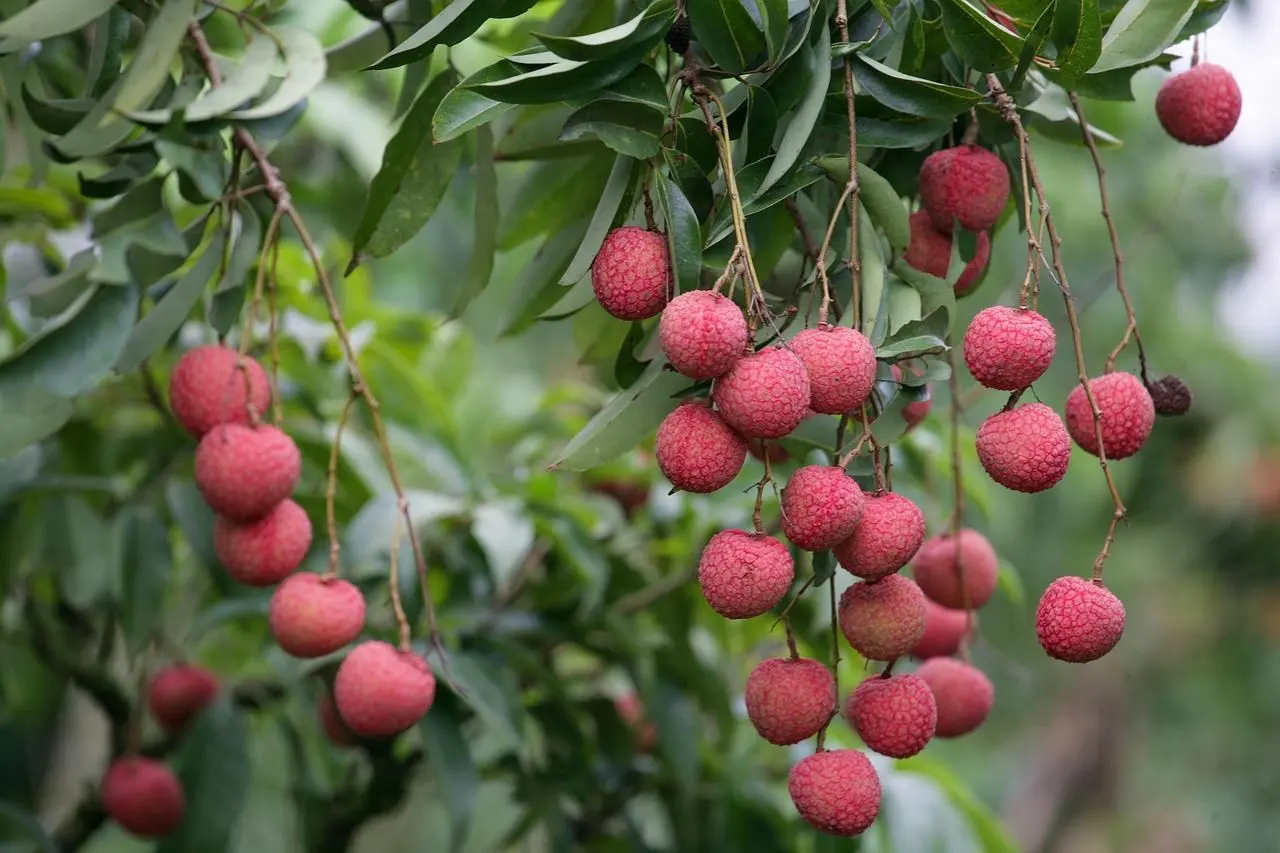
Dreaming of homegrown lychees but unsure your garden can manage? Here is how to grow lychee: a warm, frost-free spot, full sun, well-drained soil and a lot of patience.
This guide is part of a series on tropical fruit trees for home gardens, so it stays focused on one species and what it asks of you.
| Item | Value |
|---|---|
| Hardiness zones | USDA zones 10 and 11 (zone 9 with extra attention to cold snaps) |
| Sunlight | At least six hours of direct sun daily |
| Mature height | 40 feet or more |
| Spacing from structures or other trees | At least 20 feet |
| Cold tolerance of a mature tree | As low as 25°F |
| Wait for first fruit from a nursery tree | Around 3 to 5 years |
These figures come from Epic Gardening’s lychee guide and Homes & Gardens’ lychee guide. Growing advice can change and results vary by site, so check the sources before you rely on them.
Which climate suits lychee?
Lychee is a tropical evergreen native to southern China, and it is happiest in warm, humid climates with mild, dry winters and hot, rainy summers, as Epic Gardening describes it.
In practice that points to USDA zones 10 and 11. Gardeners in zone 9 can still try it if they pay attention to cold snaps, and the tree does not perform well in coastal areas close to sea level, according to Epic Gardening.
Cold is the main limit. A mature tree can tolerate temperatures as low as 25°F, but cold temperatures will damage young trees, so keep them out of frost’s way, says Homes & Gardens.
Where frost is common, Epic Gardening suggests planting in containers so the tree can move indoors or to a sheltered spot such as a greenhouse. Homes & Gardens adds a catch: the tree wants to spend spring and summer outdoors for pollination, so one kept indoors all year will not bear fruit unless it sits in a greenhouse.
If a pot is your plan, the guide to tropical fruit trees in pots covers the container side in more depth.
Choosing a spot and soil
Lychee wants full sun. Epic Gardening asks for at least six hours of sunlight daily, while Homes & Gardens suggests six to eight hours of direct sun in a spot protected from damaging winds.
Drainage matters as much as light. Keep these points in mind when you walk the garden:
- Avoid low-lying spots where water tends to pool.
- Skip heavy clay and waterlogged ground, because lychee trees are susceptible to root rot.
- Aim for well-drained, slightly acidic soil rich in organic matter.
- Leave room for a big tree, since a lychee can reach a wide canopy over time.
Size deserves planning. A lychee can reach 40 feet or more, and Homes & Gardens recommends planting it at least 20 feet away from structures or other trees, because cramping affects growth and harvest.
If your soil is heavy, Epic Gardening says to work in plenty of organic matter before planting. Sow Exotic adds that lychee does very well planted on mounds, which helps water drain away.
Planting a lychee tree, step by step
Early spring is typically the best time to plant, according to Epic Gardening. Homes & Gardens frames it the same way: wait until the risk of frost has passed.
A container-grown nursery tree is the most reliable route. Follow these steps, drawn from Epic Gardening’s planting advice:
- Dig a hole that is a little larger than the bag or container.
- Slide the tree out gently and set it so it sits at the same level as it did in the container.
- Fill the gaps with soil, firm it down gently and water thoroughly so the roots settle in.
- Add a layer of organic mulch around the base, keeping it off the trunk itself.
Growing from seed is possible but slow. Epic Gardening says to plant seeds soon after taking them from the fruit, soak them overnight and sow them about an inch deep in a well-draining mix. The trade-off is that a seedling will not match its parent, and it may need a decade or more before it fruits.
Watering and routine care
A young lychee needs regular watering until it is well established, and Sow Exotic advises giving it more during flowering and fruiting season. The same guide warns that the tree dislikes standing water and too much salinity.
Size control is mostly a matter of pruning. Epic Gardening notes that lychee responds well to it if you are short on space or want a more manageable tree.
Flowering, pollination and the wait for fruit
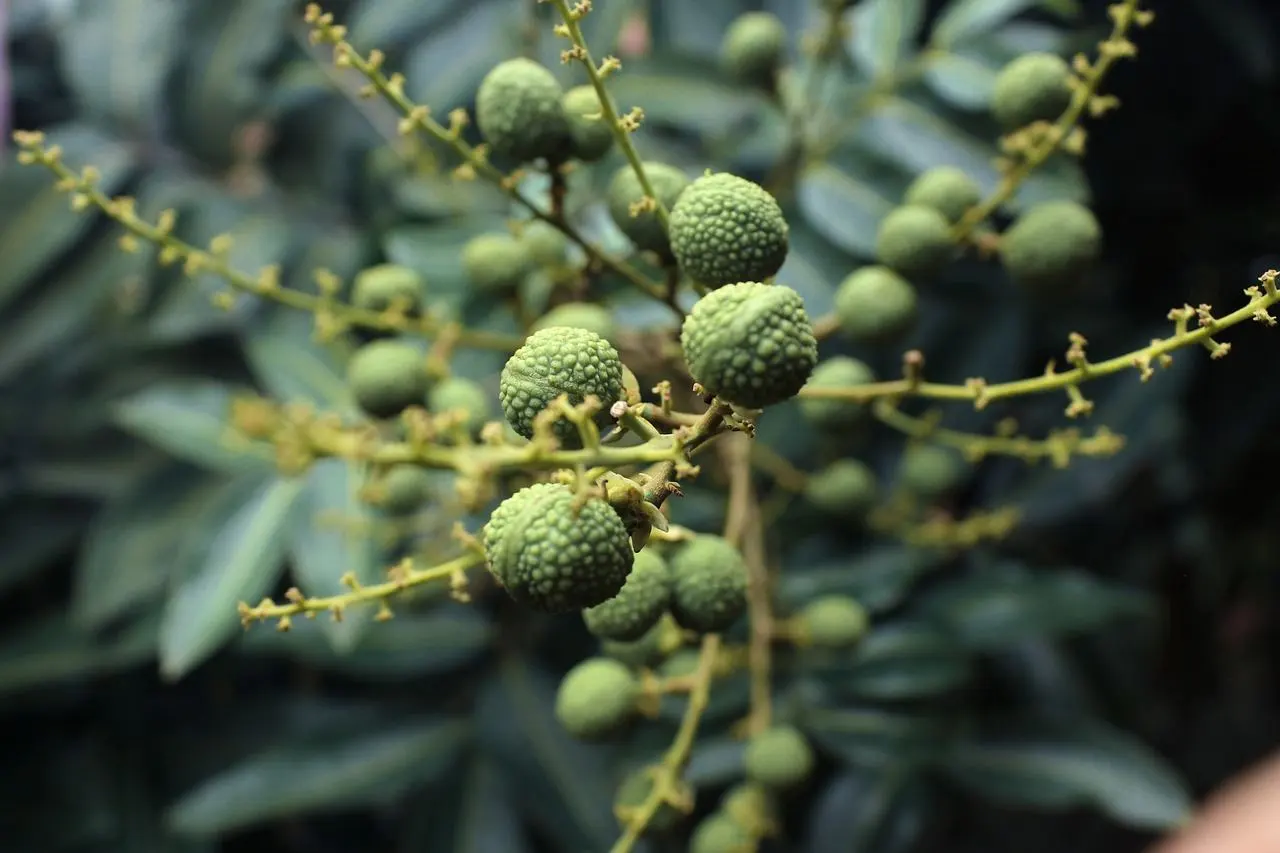
In late spring the tree produces clusters of greenish-white flowers that attract masses of pollinators such as bees, Epic Gardening reports. A single tree is enough to set fruit.
The real test is patience. A nursery tree takes around 3 to 5 years to give its first fruits, according to Epic Gardening, and you should not expect any in the first year.
While you wait, you may enjoy reading about how to grow dragon fruit, another tropical fruit for warm gardens.
Frequently asked questions
Can lychee grow in a cold climate?
Show answer
Only with protection. A container lets you shelter the tree from frost, but it still needs to be outdoors in spring and summer for pollination, as Homes & Gardens explains.
Do I need two trees to get fruit?
Show answer
No. Lychee is considered self-fertile, so a lone tree can crop, although Epic Gardening says a companion tree could improve fruit set and quality.
Which varieties are most common?
Show answer
‘Mauritius’ and ‘Brewster’ are the most common choices, per Epic Gardening.
Is lychee suitable for a pot?
Show answer
It can work with pruning. Sow Exotic describes the trees as easy to keep at smaller sizes and well suited to container growing.
How long before a lychee tree fruits?
Show answer
A bought tree usually needs 3 to 5 years, while a tree grown from seed can take a decade or more, based on Epic Gardening.