
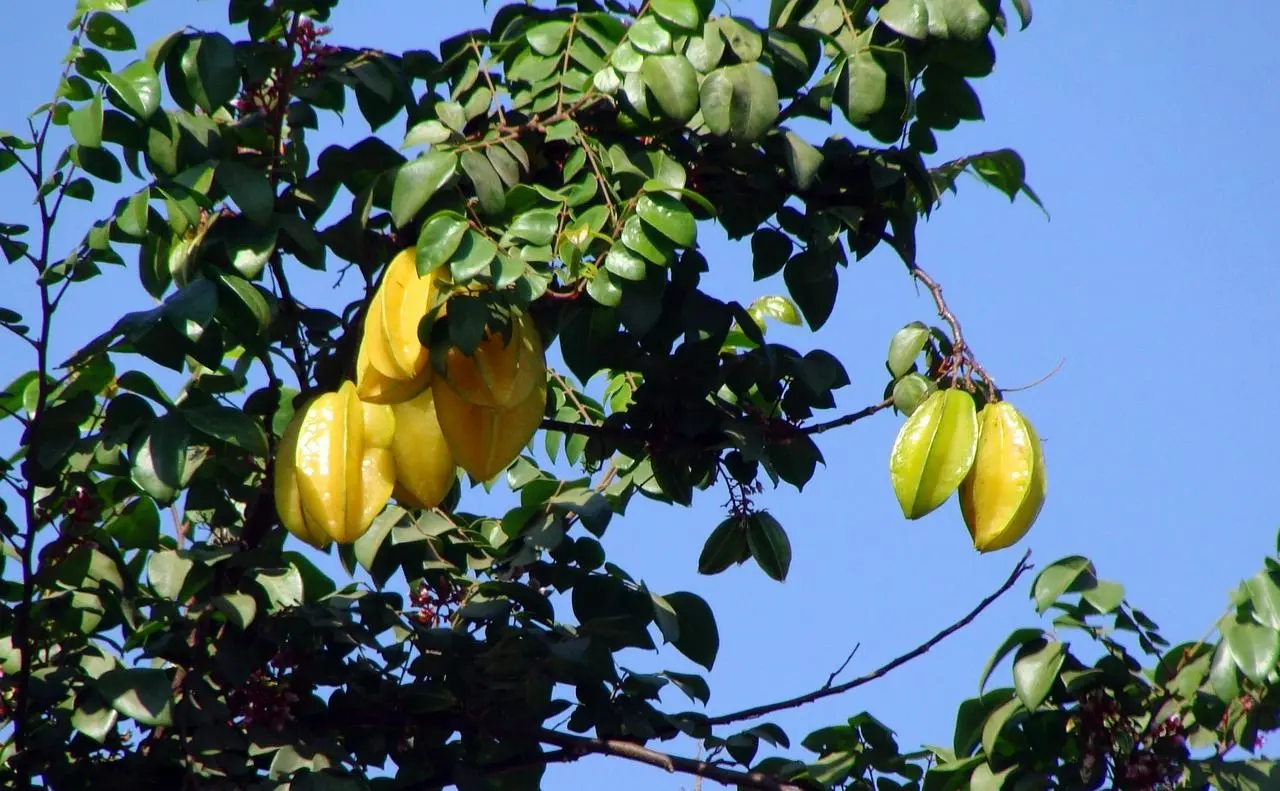
Wondering how to grow starfruit at home? Begin with a suitable climate and a trusted extension guide. The University of Florida’s carambola fact sheet covers varieties, planting, care and pests.
Starfruit is one of several species covered in the broader guide to tropical fruit trees for home gardens.
| Item | Value |
|---|---|
| Common names | Carambola, also known as star fruit |
| Scientific name | Averrhoa carambola |
| UF/IFAS fact sheet code | HS12/MG269 |
| Published in EDIS | 2005-08-08 |
| Original publication | April 1994 |
| Author’s institution | University of Florida (Jonathan H. Crane) |
These details come from the UF/IFAS EDIS fact sheet record and the Ask IFAS carambola topic page. Publication details can change, so check the source before you rely on them.
What the University of Florida fact sheet covers
The main reference behind this page is Carambola Growing in the Florida Home Landscape. Its author, Jonathan H. Crane, is a professor and tropical fruit crops specialist at the University of Florida’s Tropical Research and Education Center in Homestead, according to the EDIS record.
The abstract describes a comprehensive overview of carambola, covering its cultivation, varieties and environmental requirements. It also points to the importance of proper planting and care.
In practice, the document walks through these topics:
- The tree’s growth patterns
- Optimal conditions for fruit production
- Planting and aftercare
- Pests and diseases
- Environmental stressors and how to manage them
The EDIS record files it under historical fact sheets, with an original publication of April 1994 and an EDIS posting on 2005-08-08. Treat it as a solid starting point, then compare it with the advice of a current local extension office.
Is your climate suitable for starfruit?
The fact sheet’s abstract calls carambola a valuable addition to home landscapes in suitable climates. That wording matters: the tree is a tropical species, and the match between plant and place comes before any choice of variety or planting spot. The source record does not give a single climate rule in its summary, so this page does not invent one.
A related UF/IFAS blog post, listed on the Ask IFAS topic page, asks how three things affect fruit trees at home:
- Temperature changes
- Overly wet soils
- Salty irrigation water
Run through that list for your own yard before buying a tree. If one of those problems is already a regular feature of your site, plan around it early.
Planting and care: a practical order of work
The fact sheet stresses proper planting and care, and its topics suggest a sensible sequence. Use it as a checklist when you read the full document:
- Confirm that your climate suits a tropical tree.
- Read the section on varieties before you buy anything.
- Study the guidance on optimal conditions for fruit production.
- Follow the planting instructions, then keep up the care they describe.
- Learn the common pests and diseases so you can spot trouble early.
Extension publications sometimes name a specific type. For example, one UF/IFAS cost study listed on Ask IFAS is titled around sweet carambola (Averrhoa carambola) in south Florida. If you are choosing between types, check which one a nursery is actually selling.
Pests, diseases and environmental stress
According to the EDIS abstract, the fact sheet addresses pests, diseases and environmental stressors and offers solutions for effective management. The summary does not name specific pests, so go to the full PDF for those details.
Storms are one stressor home growers report. A gardener writing in a post listed by Ask IFAS says a starfruit tree survived a hurricane with some leaves missing but still alive. That is one person’s experience, not a guarantee, but it shows why you should read the stress sections before planting.
Planning for the harvest
The same Ask IFAS listing notes that people with a starfruit tree often have to give the fruit away because of abundant crops. The gardener quoted there also says the tree grew relatively quickly. Take both as anecdotes from one extension blog, not as promised results.
Planning ahead is still worthwhile. Think about who will take the extra fruit, and about whether a single tree is enough for the space you have.
If starfruit does not suit your site, you can compare other options. Readers weighing alternatives may like to see how to grow dragon fruit. Another option is to read about how to grow lychee before deciding.
Frequently asked questions
What is starfruit called in extension publications?
Show answer
Most University of Florida pages use the name carambola and add star fruit as the everyday name. The species name Averrhoa carambola appears in the titles of related publications on the Ask IFAS topic page.
Where can I find a detailed growing guide?
Show answer
Start with the UF/IFAS fact sheet on carambola in the Florida home landscape, which is hosted by the EDIS journal. The Ask IFAS topic page lists related publications and blog posts.
Is the fact sheet out of date?
Show answer
It was first published in April 1994 and posted to EDIS in August 2005, per the EDIS record. That makes it a useful baseline, but you should confirm local details with a current extension source.
Does a starfruit tree grow quickly?
Show answer
One gardener’s post on the Ask IFAS page describes fairly quick growth. Because that is a single report, your own results will depend on your site and care.