
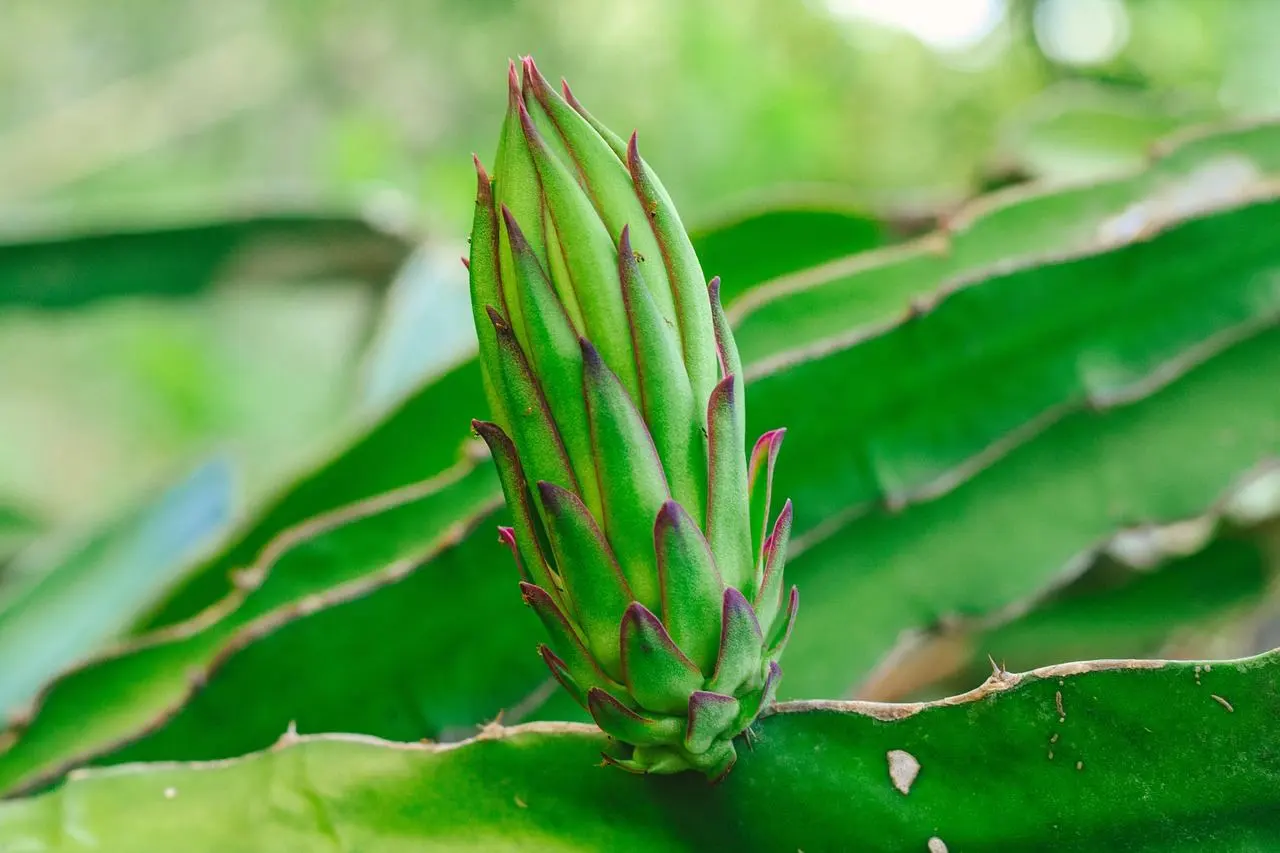
Wondering how to grow dragon fruit at home? You’ll need full sun, a climbing support, a second variety for pollination and some patience: fruit can arrive in about two years.
Dragon fruit is a climbing cactus rather than a tree, and it fits into the wider picture of tropical fruit trees for home gardens.
| Item | Value |
|---|---|
| Stem length if unpruned | Well over 20 feet |
| Time to first fruit | As little as two years |
| Full maturity | 3-4 years |
| Florida harvest window | June through November |
| Pollination to ripe fruit | Approximately one month |
| Shade while establishing | About 30% partial shade |
These figures come from a UF/IFAS Extension Sarasota County blog post written for Florida conditions. They can change and will differ elsewhere, so check the source before you rely on them.
What dragon fruit is and why the variety matters
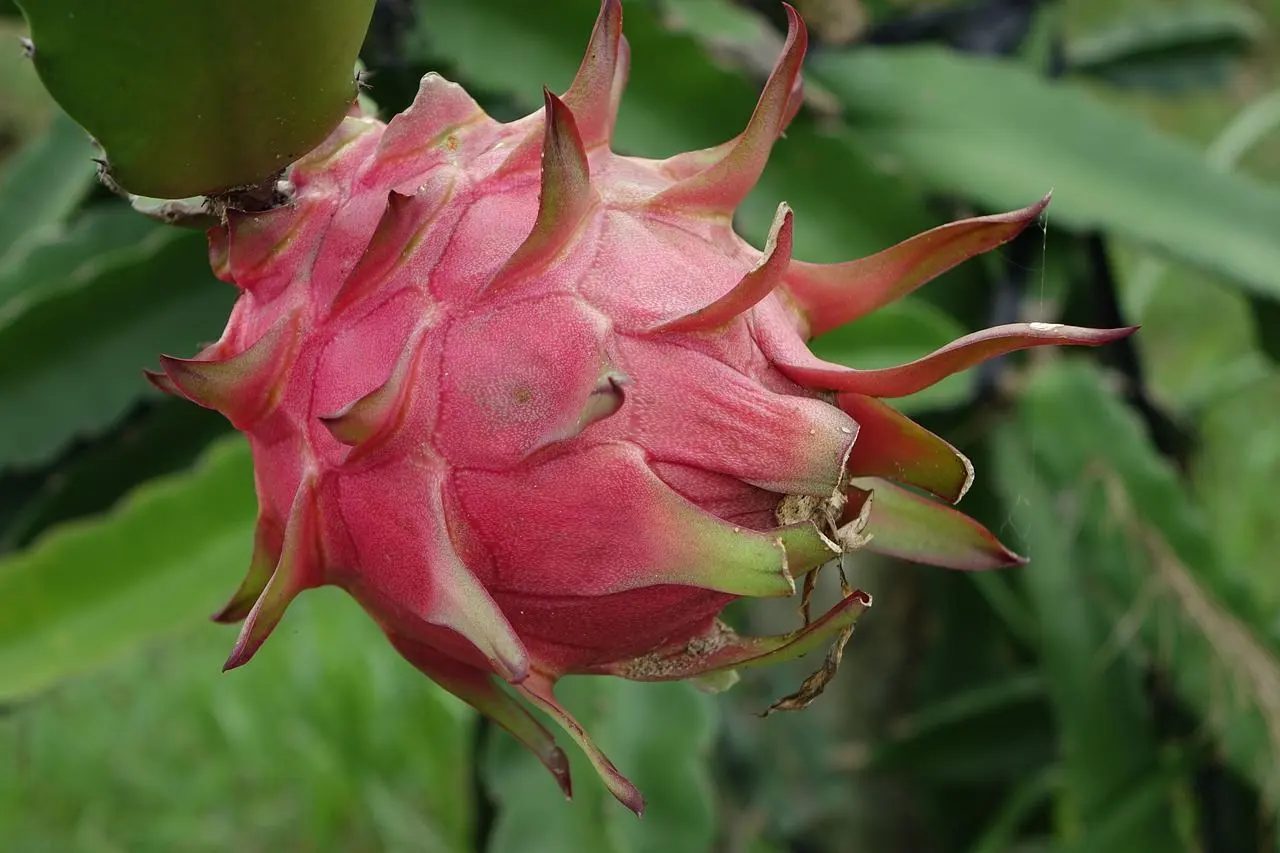
Dragon fruit, also called pitaya, is a group of fast-growing, climbing cactus plants that thrive in South Florida’s subtropical climate. The stems have three to five sides, and the plant produces large nocturnal flowers followed by red or yellow fruit with white, red or magenta pulp, according to the Sarasota County post.
That post explains that three different fruit species all go by the name dragonfruit, and that picking the right species and cultivar is one of the most important steps. It lists several points to weigh before you buy a plant:
- Pollination habits: cultivars differ in what they need to set fruit.
- Productivity: many plants on the market flower abundantly but give little or no fruit.
- Reputation: the deep-purple-fleshed ‘Halley’s Comet’ is common in big box stores for its looks, yet it tends to be less productive than other cultivars.
- Origin: a starter plant from a local grower who harvests plenty of fruit is the recommended route, because few varieties have consistent identifying traits.
For deeper background, the UF/IFAS fact sheet by Jonathan H. Crane and Carlos F. Balerdi, published by the UF Department of Horticultural Sciences in November 2005, includes tables of pitaya species, varieties available in Florida and cultural practices by month. It is a historical fact sheet, so read it alongside newer extension material.
How to grow dragon fruit: sun, support and pruning
Dragon fruit thrives in full sun, but the Sarasota County post says it benefits from about 30% partial shade during establishment. Once the plant is settled, plan on bright, open light.
Cold is the main hazard named in that post: freezing temperatures can damage or even kill plants. Yellow-skinned varieties seem particularly sensitive, which is worth remembering if your winters bring frost.
Because the plant climbs, it needs a trellis or similar support. The same post shows young plants thriving on a raised trellis system and says few inputs are needed beyond the initial growing setup.
Left alone, the stems can reach well over 20 feet, as the Sarasota County post points out. Pruning is how you keep a plant to the size of its support.
Pollination, flowering and harvest timing
Dragon fruit is a long-day plant, so it relies on daylength to trigger flowering. According to the Sarasota County post, growers sometimes add supplemental lighting to stretch the day and lengthen the fruiting season.
Many cultivars benefit from hand-pollination. The post suggests this routine:
- Plant at least two genetically distinct varieties.
- Watch for open flowers, which appear at night.
- Use a small brush to move pollen onto the stigmas of the open flowers.
Fruit matures approximately one month after pollination, and a plant produces many flushes of flowers over a season. The same post places the Florida harvest between June and November, with August as mid-season.
What yield can you expect?
The Sarasota County post says many plants fruit in as little as two years and reach maturity at 3-4 years. It adds that a single plant can yield approximately 220lbs of fruit per year.
Those numbers describe Florida’s subtropical climate, so results in other regions may differ. The same post reports that Florida has over 720 acres dedicated to dragonfruit, mostly in Miami-Dade County but also in Charlotte County.
Pruning, canker and what to read next
UF/IFAS lists a publication on stem and fruit canker of dragon fruit in South Florida on its Ask IFAS pitaya topic page. A related fact sheet, based on Dutra et al. (2025), presents evidence from local commercial plantings that off-season pruning was effective for managing dragon fruit canker.
That page says the audience includes home gardeners as well as commercial producers, so it is a sensible next stop if your stems show damage.
Gardeners who prefer a vine can read how to grow passion fruit. Those weighing a true tree might start with how to grow lychee.
Frequently asked questions
Can I start dragon fruit from cuttings?
Show answer
Yes. The Sarasota County post says the plant grows easily from cuttings, which makes it a popular pass-along plant among neighbours.
Will my plant set fruit without hand-pollination?
Show answer
It depends on the cultivar. Some are self-pollinating, while others need hand-pollination or even cross-pollination to fruit reliably, according to the Sarasota County post.
Is dragon fruit a tree?
Show answer
No. The Sarasota County post describes it as a climbing cactus with fleshy stems, which is why it needs something to climb.
Where can I find the original Florida guidance?
Show answer
The Ask IFAS pitaya page collects UF/IFAS publications on the plant, including the home-landscape guide and the pruning fact sheet on canker.