
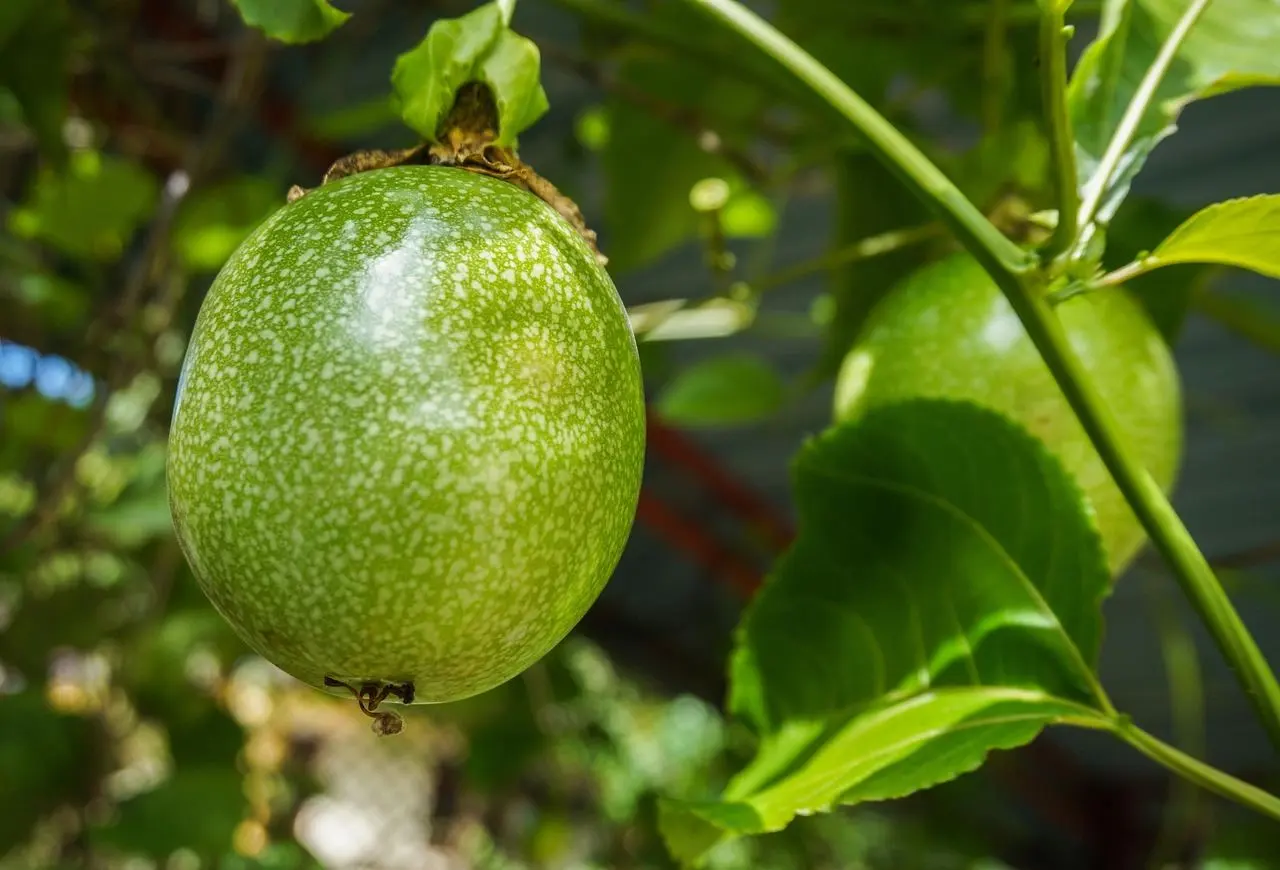
Wondering how to grow passion fruit without losing the vine to frost or a tangle of tendrils? Give it full sun, a sturdy trellis, well-drained soil and frost-free winters, and it will climb fast and fruit well.
This vine is one of many crops featured in the guide to tropical fruit trees for home gardens.
| Item | Value |
|---|---|
| Hardiness zones for tropical passion fruit | zones 10-12 |
| Preferred soil pH | pH 5.5 to 6.5 |
| Average growing-season temperature | 68 to 75°F |
| Harvest timing | about 80 days after flowering |
These figures come from Epic Gardening and Harvest to Table. Growing guides differ and figures can change, so check the sources before you rely on them.
Choose the right kind of passion fruit
Start with a cultivar of Passiflora edulis, because Epic Gardening advises choosing one when you pick a vine.
Home gardeners usually meet two common types, purple and yellow, according to Harvest to Table. Purple fruit has a richer flavour and aroma than yellow fruit, while yellow fruit is sweet, acidic and tropical with mild floral notes. The purple type is Passiflora edulis, and the yellow or golden type is Passiflora edulis flavicarpa.
If you only have room for a pot, the ‘Black Knight’ hybrid is a dwarf plant that Epic Gardening describes as perfectly happy being contained.
When you buy from a nursery, expect grafted vines. SBS Food says nurseries mostly stock vines grafted onto hardy rootstocks suited to local conditions and resistant to root diseases.
Climate, site and soil
Frost-free winters suit this vine best, and Harvest to Table says it grows best in frost-free regions. Tropical types thrive in zones 10-12, according to Epic Gardening. During the growing season, aim for an average of 68 to 75°F.
A good site ticks these boxes, based on guidance from Harvest to Table, SBS Food and Epic Gardening:
- Full sun, or partial shade where summers are very hot.
- Shelter from strong wind.
- Not a low spot where cold air or frost can settle.
- Well-drained, compost-rich soil with a pH of 5.5 to 6.5 that is never constantly wet.
- Something to climb: a trellis, arch, fence or pergola.
In frost-prone areas, plant the vine next to a wall or fence for protection, as Epic Gardening suggests. Choose the spot with care, because the vine is hard to move later.
If your yard suits tropical crops, the guides on how to grow bananas and how to grow dragon fruit cover other plants that like similar warmth.
Planting: when, how and in what
Spring after the last frost is the best planting time in most areas, according to SBS Food. The steps below for a nursery vine follow a love the garden guide.
- Dig a hole twice as wide as the pot and the same depth.
- Set the vine in at the same depth it was growing in its pot.
- Water it in to settle the roots.
- Mulch around the root zone with an open organic mulch to hold moisture and suppress weeds.
If you plant more than one vine, leave 3-4 metres between them, as the love the garden guide advises.
To start from seed, soak the seeds in water overnight to aid germination, as the love the garden guide suggests. Epic Gardening notes that fresh seeds germinate in a couple of weeks, while older ones may take months.
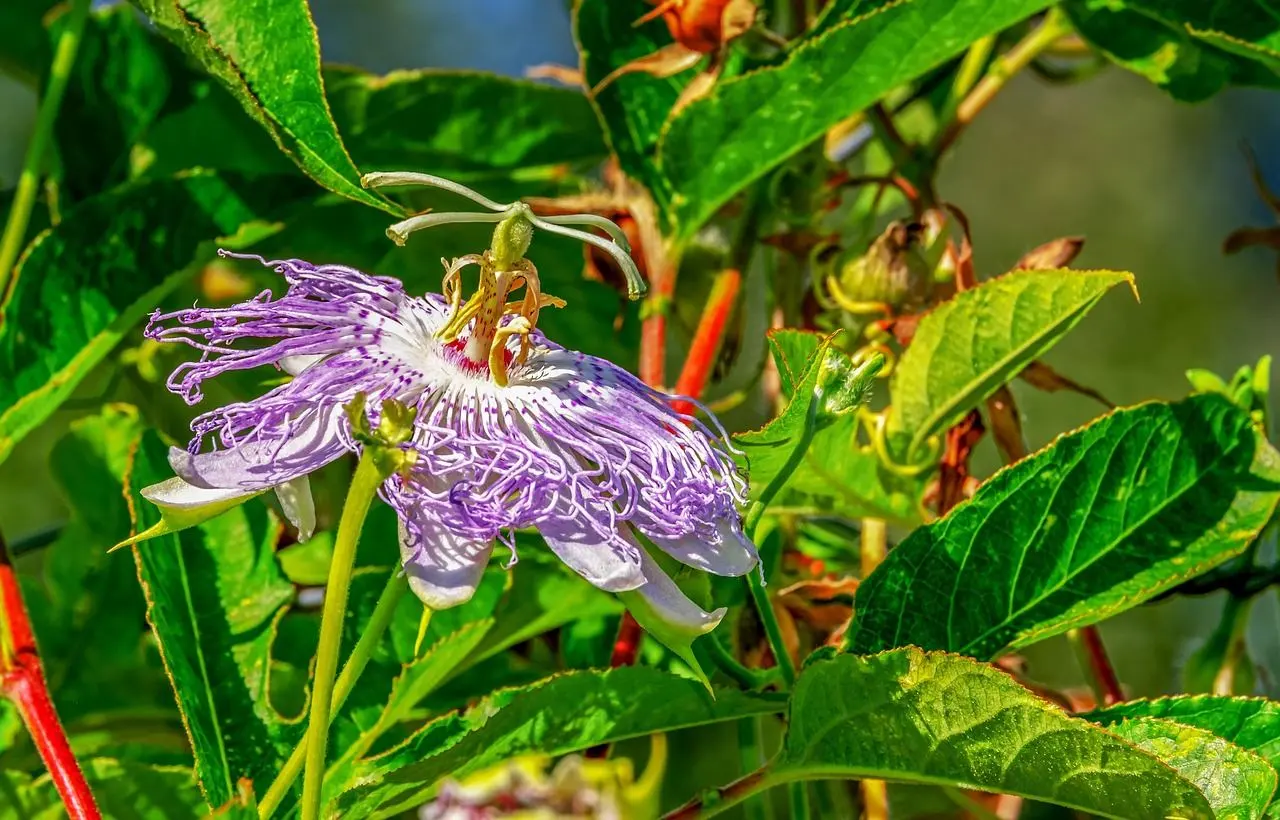
Harvest to Table says passion fruit is most often grown from cuttings started indoors or in a greenhouse. Gardener’s Path warns against taking cuttings from a grafted parent plant, because that can increase the chance of suckers as the plants mature.
For a container, choose a pot at least 50cm deep by 50cm wide with plenty of drainage holes, per the love the garden guide. Place the pot next to its trellis or fence at planting time so the vine has support as it grows.
Training, watering and feeding
Train the vine up wires or a trellis, as Harvest to Table suggests. SBS Food adds that vines need training and pruning to avoid a tangled mess and to keep flowers accessible to pollinating bees.
Water deeply in extended dry spells, because SBS Food warns that dry soil leads to flower and fruit drop. Keep water off the foliage where you can, since the love the garden guide links wet leaves to a higher risk of fungal and bacterial disease.
Advice on feeding varies. GrowVeg says none is needed beyond steady moisture for young plants, while SBS Food suggests a well-balanced organic fertiliser in early spring and early autumn.
Prune in early spring if the vine needs a hard cut, because flowers and fruit form on new growth, according to SBS Food.
Why is my passion fruit not setting fruit?
SBS Food says poor fruit set can have several causes. These are the ones it lists:
- Excessive fertilising, which sends vines into luxuriant growth at the expense of flowers and fruit.
- Extremes of weather, including very hot, cold, wet, dry and windy conditions that can damage pollen.
- Absence of bees: prune excessive foliage to expose the flowers, or pollinate by hand.
- Dry soil, which makes developing fruit drop early or wrinkle.
- Fruit fly stings, which make fruit shrivel and drop.
You can also encourage pollinators by growing other spring and summer flowers nearby, since the love the garden guide ties bees and other insects to better pollination and fruit production.
Harvesting and storing the fruit
Timing to the first fruit varies by guide and climate. SBS Food expects fruit 6-8 months after planting, while the love the garden guide says heavy fruiting can take 12-18 months.
Let fruit ripen on the vine, because SBS Food says it will not ripen off the vine. Ripe fruit drops when ready, so pick up fallen fruit regularly.
Fruit keeps in the fridge for up to 2-3 weeks, according to SBS Food. You can also spoon the pulp into ice cube trays and freeze it for later.
Plan for replacement eventually: the same guide says vines generally perform well for 3-5 years, after which they need to be replaced.
Frequently asked questions
Why do some passion flower vines never give edible fruit?
Show answer
The Passiflora genus is large, and Epic Gardening says Passiflora edulis is edible, unlike many of its relatives. Check the species name on the plant label before you buy.
Can I move an established vine?
Show answer
Plan on leaving it where it is. Epic Gardening says you won’t be able to transplant once the plants are established, and Gardener’s Path says they dislike being moved after their taproots have developed.
What if my winters are cold?
Show answer
Hardy species such as P. incarnata and P. caerulea suit temperate climates, and GrowVeg says hardy species are winter hardy to at least 0°F (-18°C). The large-fruited tropical species cannot tolerate frost, and the smaller P. incarnata fruits have many seeds and little flavor.
What is eating holes in the leaves?
Show answer
Usually caterpillars, which GrowVeg notes mature into butterflies. The foliage supports several species of butterfly larvae, so some damage comes with the plant.
Can you eat the seeds?
Show answer
Yes, Harvest to Table says the seeds are edible but are usually removed before eating. The soft, sweet, aromatic pulp is the main edible part.