
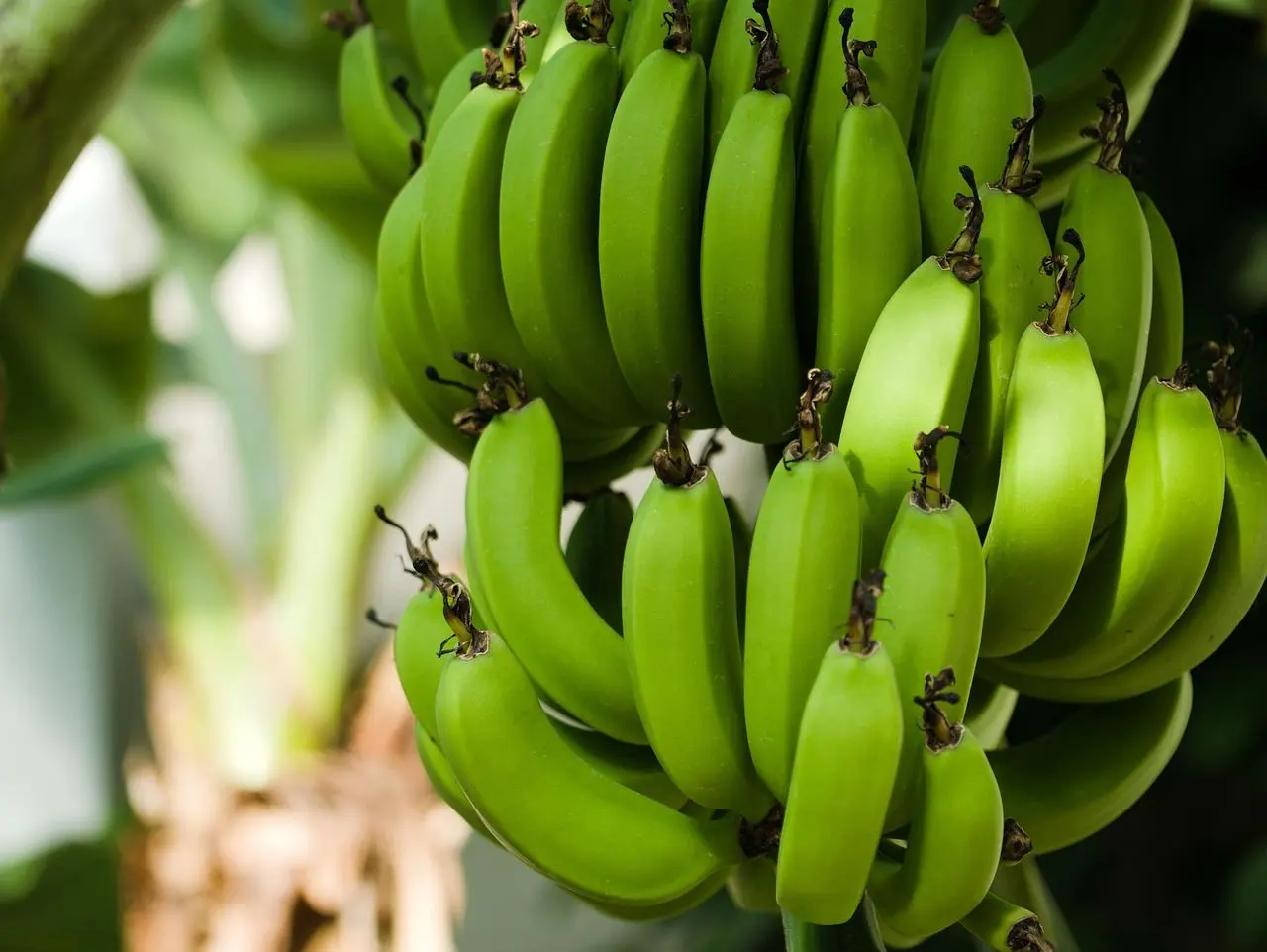
Wondering how to grow bananas where winters bite? Give them sun, shelter and plenty of water in summer, then protect them from frost, or lift them indoors, once the cold arrives. Fruit is a bonus, not a promise.
Bananas are one of several warm-climate plants covered in the guide to tropical fruit trees for home gardens.
| Item | Value |
|---|---|
| Mature plant height | 3m (10ft) or more |
| Longest leaves | Up to 2m |
| Typical nursery plant size | 30cm to 1m or more tall |
| Leaf damage begins | 32°F |
| Underground rhizomes die | Sustained 22°F or lower |
| Dormant storage in a cool, dark place | 40 to 50°F |
These figures come from the RHS banana growing guide and the Gardener’s Path overwintering guide. They can change, so check the source before you rely on them.
What banana plants are and which type to buy
Banana plants add tropical drama to warm, sheltered gardens in summer, as the RHS growing guide puts it. Despite the look, they are not trees: they form no woody trunk and are classed as herbaceous perennials.
Size matters when you pick a spot. The RHS says mature plants can reach 3m (10ft) tall or more, with arching leaves up to 2m long.
The RHS names Musa and Ensete as the two main types grown in the UK. Gardener’s Path adds that the genus Musa has about 70 species, native to tropical India, Southeast Asia and northern Australia. Two plants are the easiest to find:
- Japanese banana (Musa basjoo): the hardiest species, which may survive outdoors in a warm, sheltered spot if wrapped in insulating material, according to the RHS.
- Red Abyssinian banana (Ensete ventricosum ‘Maurelii’): a tender cultivar that, like most bananas, must be kept from frost (RHS).
Both hold an RHS Award of Garden Merit, which the RHS says shows they performed well in its trials.
Garden centres mostly sell potted plants from about 30cm to 1m or more tall, mainly in spring and summer, and usually only the popular types, per the RHS. Ornamental types vary from green to variegated green and red, according to University of Illinois Extension.
Where and how to plant bananas
Bananas can go outdoors in summer in borders and large containers, says the RHS. Smaller plants can live as houseplants in a conservatory or heated greenhouse, either all year or just over winter.
When you position a pot or dig a border, the RHS advises a spot that offers:
- Warmth and sun for all or most of the day
- Fertile soil or compost
- Drainage, so the root zone never becomes waterlogged or extremely dry
For pots, pick a dwarf variety, as Gardener’s Path suggests, because a full-size plant gets unwieldy in a container. A University of Illinois Extension blog post describes growing the more ornamental types in containers.
Sun, water and temperature limits
Summer is when bananas race ahead. University of Illinois Extension calls them very easy to grow in hot, humid summers, and says full sun and lots of water make them grow fast.
Cold is the real limit. Gardener’s Path gives three thresholds worth remembering:
- Leaves stop growing at around 55°F.
- Leaf damage starts at 32°F.
- Underground rhizomes die at sustained temperatures of 22°F or lower.
That is why the RHS describes most banana plants as tender and says they must be protected from frost.
Protecting bananas through winter
For most types, the RHS says the plant must come indoors or move into a heated greenhouse for the cold months. Gardener’s Path outlines three routes, and the right one depends on plant size and the space you have.
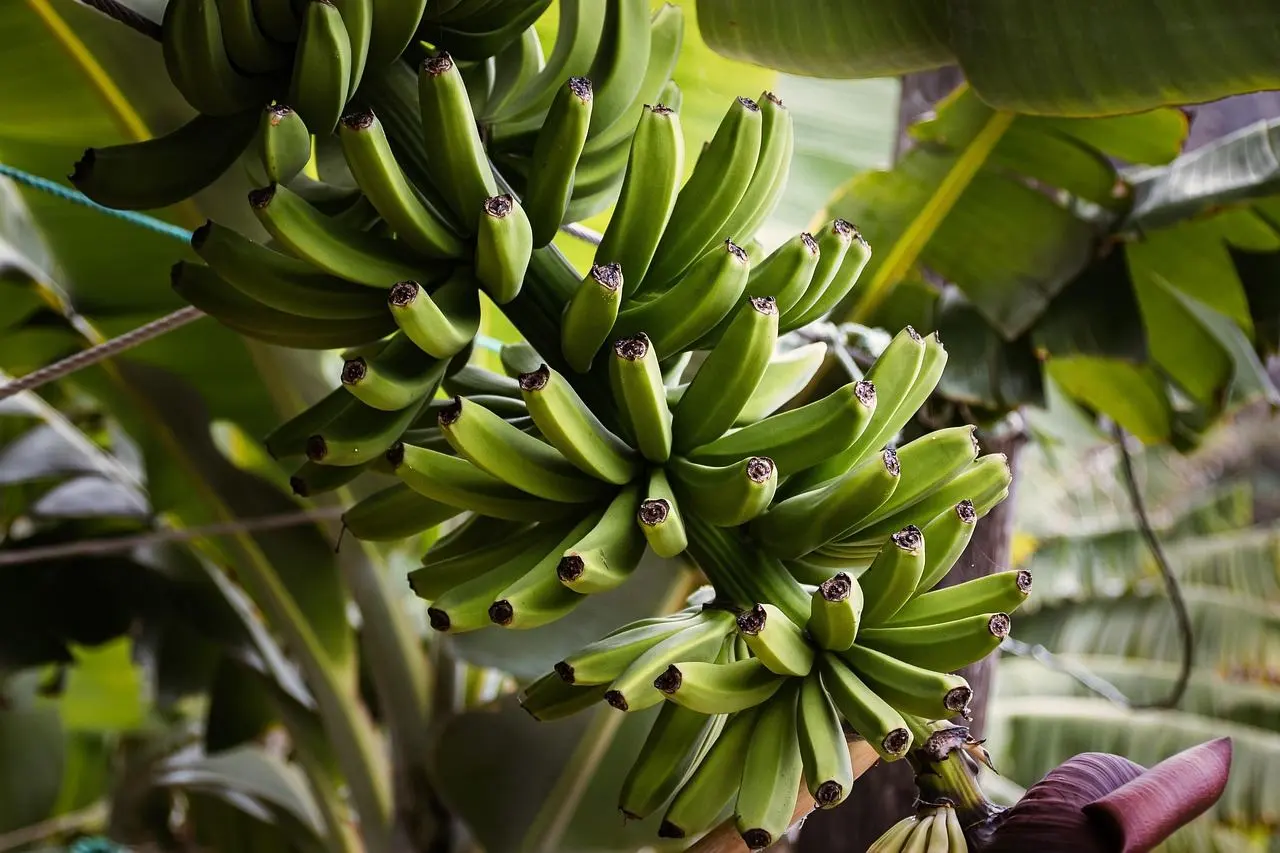
Bring a container indoors
A potted banana can spend winter in a sunny room. Gardener’s Path advises keeping the soil moist but not soggy, misting the leaves for humidity and expecting slow growth. University of Illinois Extension adds that container plants indoors need lots of light and humidity.
If you would rather store it dormant, Gardener’s Path says to cut the stem back to about six inches before the first frost. Keep it in a cool, dark place at approximately 40 to 50°F, with just enough water to stop the soil shrinking from the pot’s sides. It restarts once temperatures climb and the risk of frost has gone.
Cover a plant in the ground
The aim is to protect the corm at the base of the stem. Gardener’s Path suggests cutting the plant back to about four to six inches above ground, then piling on at least a foot of leaves, straw or other mulch.
If you prefer to keep the stem, a wire cage packed with shredded leaves or straw can surround it. Take the cage and mulch away when warm weather returns and regrowth appears.
For the Japanese banana, University of Illinois Extension says the top typically dies back in winter while the roots survive to regrow in spring. The RHS warns that wrapping takes time and space, so check you have both.
Dig it up and store it
Another option is lifting the plant into a cellar or crawlspace that stays at a steady 45 to 50°F, according to Gardener’s Path. Cut it back first, dig out the rhizomes and roots, and set the root ball in slightly moist sand.
The plant goes dormant, so it needs no light and no water while stored. After replanting, give it plenty of water to revive it.
Will bananas fruit, and how do you get more plants?
Expect leaves rather than bananas. The RHS says most bananas won’t flower or fruit outdoors in the UK, although some may in a heated greenhouse or conservatory. University of Illinois Extension reports that some plants bloom but the growing season is too short for fruit to develop and ripen.
In very mild areas and long, hot summers, the RHS says flowers are possible outdoors on Musa acuminata ‘Dwarf Cavendish’, M. ornata, M. veluntina and M. lasiocarpa.
New plants are easy to come by. Bananas multiply by sending up suckers (pups) from the mother plant’s roots, as University of Illinois Extension notes, and Gardener’s Path says the corm’s growing points sprout pups that can be transplanted.
If fruit is your priority, read how to grow papaya or how to grow passion fruit for other tropical choices.
Frequently asked questions
Is a banana plant really a tree?
Show answer
No. Gardener’s Path explains that the so-called trunk is a pseudostem, a cylinder of tightly layered leaves, which makes the plant a large herb.
Which banana copes best with cold?
Show answer
Musa basjoo is the usual answer. University of Illinois Extension says it grows in plant hardiness zones 5 through 11, though in zone 5 it might need a heavy mulch to survive a severely cold winter.
How bright should an indoor banana’s spot be?
Show answer
As bright as you can manage. University of Illinois Extension recommends the brightest location possible, notes that grouping plants raises humidity nearby, and warns that some leaf loss and browning is normal after the move.
When should I move bananas in and out?
Show answer
Ideally before the first frost, says Gardener’s Path, whether you are potting up, digging or covering. Put them back outside only after all danger of frost has passed.