
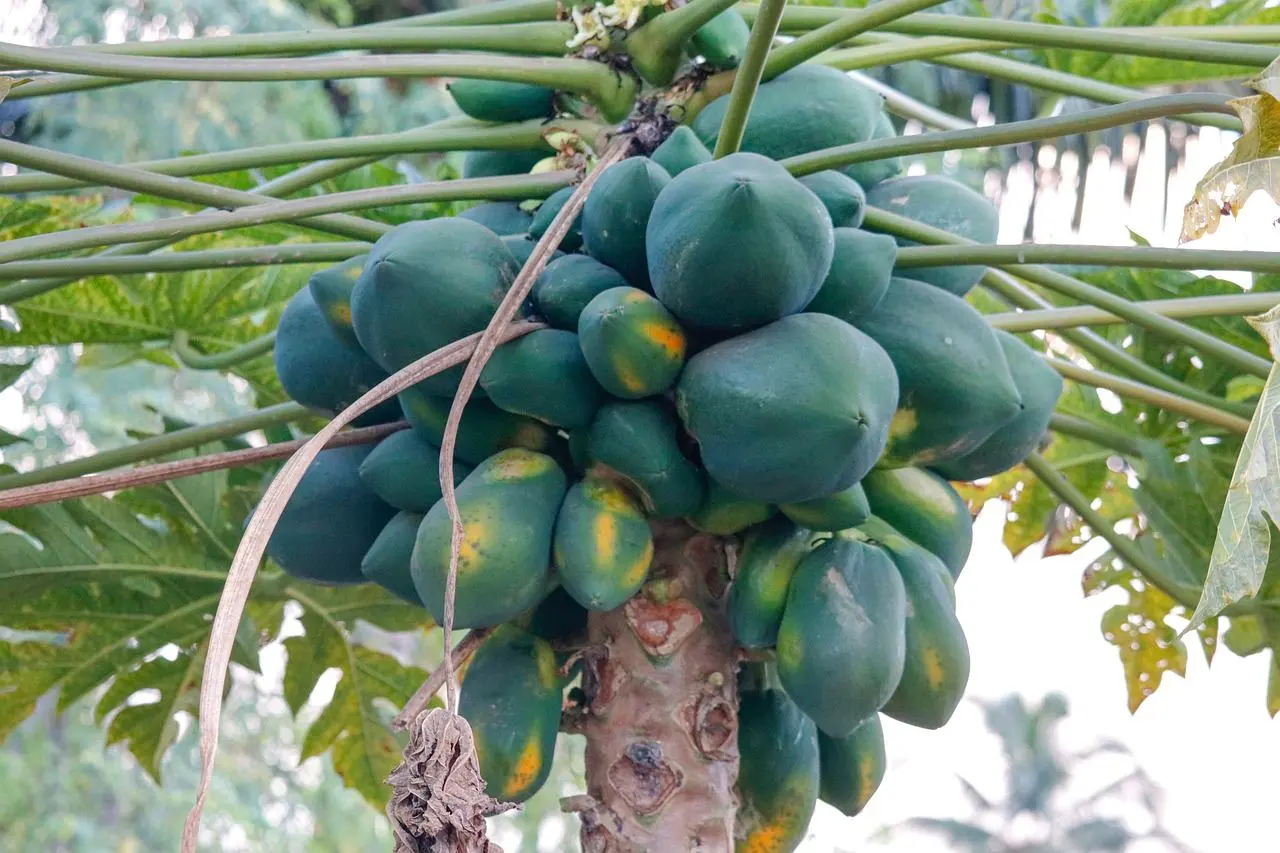
Wondering how to grow papaya without losing it to cold or soggy soil? Give it full sun, warmth, well-drained soil and steady water, and it can fruit within a year or two.
This guide belongs to the wider topic of tropical fruit trees for home gardens, where papaya sits alongside other warm-climate fruit.
| Item | Value |
|---|---|
| Cold limit outdoors | About 30°F (-1°C) |
| Planting spacing | 8-10 feet apart |
| Preferred temperature | 70-90°F |
| Container size | One plant per 14-inch (35 cm) wide pot |
| Highly productive period | 4-6 years |
These figures come from the Almanac papaya growing guide and the Homes & Gardens papaya guide, and they can change or vary by variety and climate, so check the sources before you rely on them.
Papaya types and what to expect
Papaya (Carica papaya) is native to Central America, and the fruit is now enjoyed around the world, according to Homes & Gardens. A tropical plant expert quoted there calls it technically a large herbaceous plant rather than a true tree, and describes it as resilient and adaptable.
Harvest to Table describes two broad types: Hawaiian, or yellow, papaya and Mexican, or red, papaya.
The yellow type stays compact, with trees that seldom grow taller than 8 feet, and its pear-shaped fruit commonly weighs about one pound, per Harvest to Table.
The red type is bigger, with fruit that can weigh as much as 10 pounds or more, and it is less sweet than the Hawaiian papaya, the same guide notes.
Left alone, a papaya can reach 20 feet tall, according to Almanac. Homes & Gardens adds that modern hybrid dwarf varieties are available that suit small backyards or container gardens.
Check the flower type before you commit space. Only female flowers set fruit, and many cultivars carry both male and female flowers while others are one or the other, Almanac explains. Plants often bloom within a year, which makes it easy to cull excess male plants.
Where and when should you plant papaya?
Papaya wants a hot, bright, sheltered spot. Here is what the sources point to:
- Full sun: in partial shade the fruit is not likely to sweeten, Harvest to Table says.
- Warm aspect: a south-facing spot against a wall that reflects heat is the preferred choice when possible.
- Shelter: avoid constant breeze and low spots that collect cold air.
- Soil: sandy, well-drained ground suits it best, and on damp ground a mound helps drainage.
- Acidity: papayas prefer a soil pH of 5.5 to 6.5, per the same page.
Papayas are tropical plants with little tolerance for cold and are hardy only to about 30°F (-1°C), according to Almanac. They prefer warm temperatures of 70-90°F, per Homes & Gardens.
On timing, Harvest to Table suggests setting plants out in spring or autumn. Almanac says container-grown plants can go in at any time of year in tropical climates except the dry season, which you can read on its papaya growing guide.
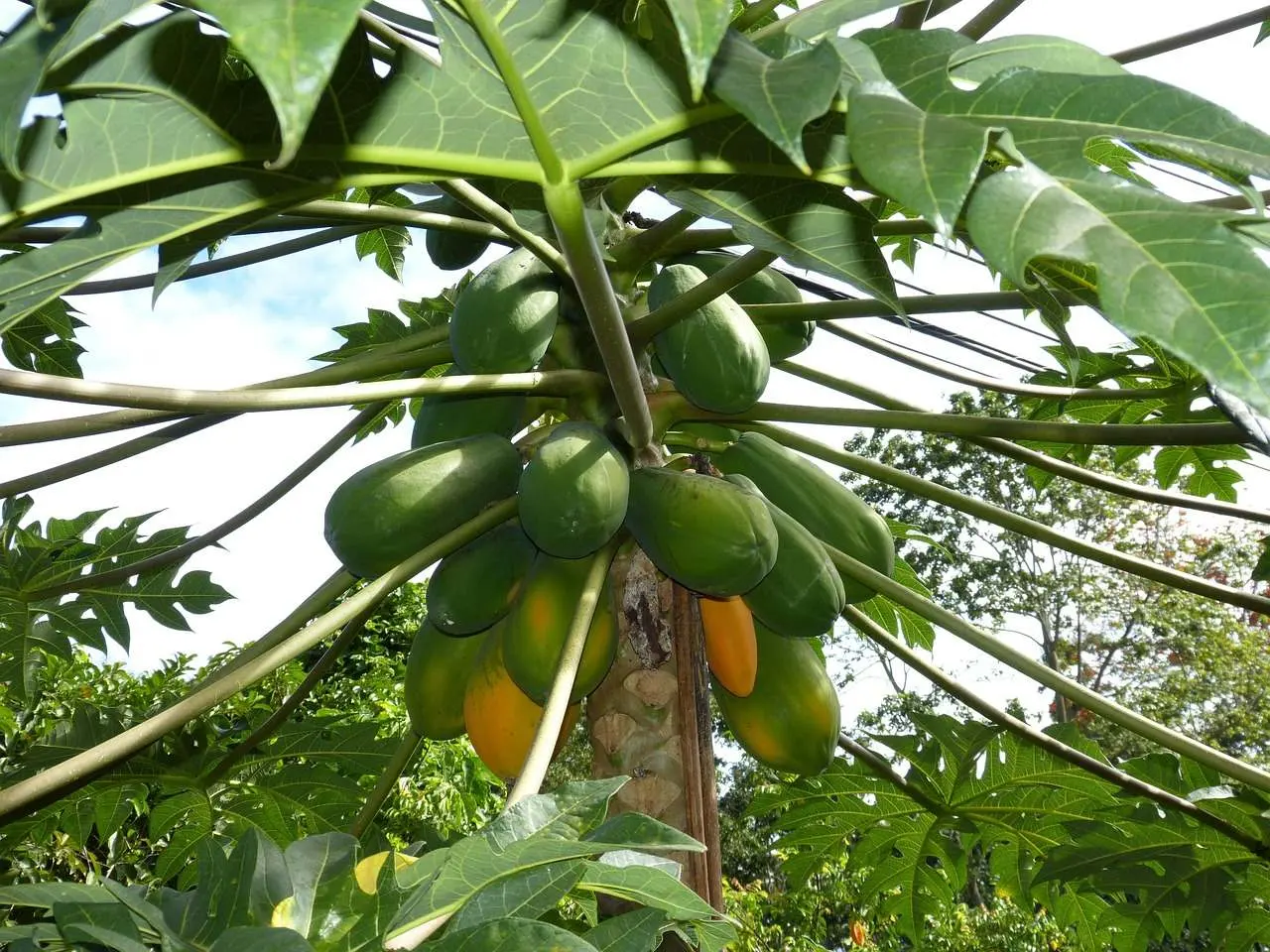
Planting papaya step by step
- Prepare the soil. Adding organic matter such as compost helps improve drainage in poorer soil types, Homes & Gardens advises.
- Mark the spots. Space plants 8-10 feet apart.
- Set the depth. Plant so the top of the rootball is level with the soil.
- Switch to pots if needed. Where the ground stays very wet, use free-draining potting soil in containers instead.
Papayas are easily grown from seed sown in containers or straight where you want the plants to grow, Almanac notes. Harvest to Table recommends an all-purpose soil mix with sand added for seed.
For pots, give each plant its own 14-inch wide container, per Almanac. Harvest to Table also suggests keeping several plants at different stages of maturity, because old ones become less productive and can be destroyed.
Many varieties are self-fertile, but growing more than one papaya rewards you with higher yields, according to Homes & Gardens.
Water, feeding, pests and lifespan
Papayas need regular water and are easily stressed by drought, Almanac says. Too much is a risk as well: overwatering can lead to root rot, per Homes & Gardens, and Harvest to Table warns the trees will not survive water-logged soil for more than a day.
Feeding advice differs between guides. Almanac suggests a balanced organic liquid fertiliser monthly in the growing season, while Harvest to Table suggests mild liquid fertilizer or fish emulsion at half strength every 2 weeks. In winter, keep the soil barely moist and withhold fertilizer.
Papayas grow so fast that they need little if any pruning, according to Almanac. Cool, drafty spots will make the plant suffer, per Harvest to Table.
Harvest to Table says to check plants regularly for these pests:
- Spider mites
- Aphids
- Mealybugs
- Scale insects
- Thrips
Several insects also injure the fruit, and papaya ringspot virus is a serious threat in some areas, Almanac reports. The leaves carry bitter sap that deters feeding by many pests.
Plan for replacement plants. The trees are often short-lived and usually die before they are ten years old, per Almanac, and Homes & Gardens says they tend to be highly productive for 4-6 years.
Harvesting ripe papaya
Most papayas fruit during the winter months, according to Almanac. Fruits are set along the main trunk and ripen gradually from the bottom up, so you pick over several weeks rather than all at once.
Fruit is ripe when it changes color and feels soft, and the same guide recommends refrigerating papayas for longer storage.
Gardeners planning a wider orchard can also read how to grow mango tree and how to grow bananas for more warm-climate fruit.
Frequently asked questions
Can you grow papaya in a container?
Show answer
Yes, and compact hybrid types are the usual pick for it. Give each plant its own pot and a mix that drains freely, as sitting in wet soil is what these plants handle worst.
How soon will a papaya plant fruit?
Show answer
The sources differ. Homes & Gardens says plants can crop from their first year, while Almanac says production often begins in the second year after planting.
Will papaya survive a frost?
Show answer
Almanac lists it as not frost tolerant. A tropical plant expert quoted by Homes & Gardens says it can withstand light freezes, yet advises protection, and suggests a greenhouse or indoor growing in cooler climates.
Can you start papaya from a fruit you bought?
Show answer
Harvest to Table says seed saved from store-bought fruit can be used to propagate the plant. Sow more than one, because some plants will flower male and only female flowers set fruit.