
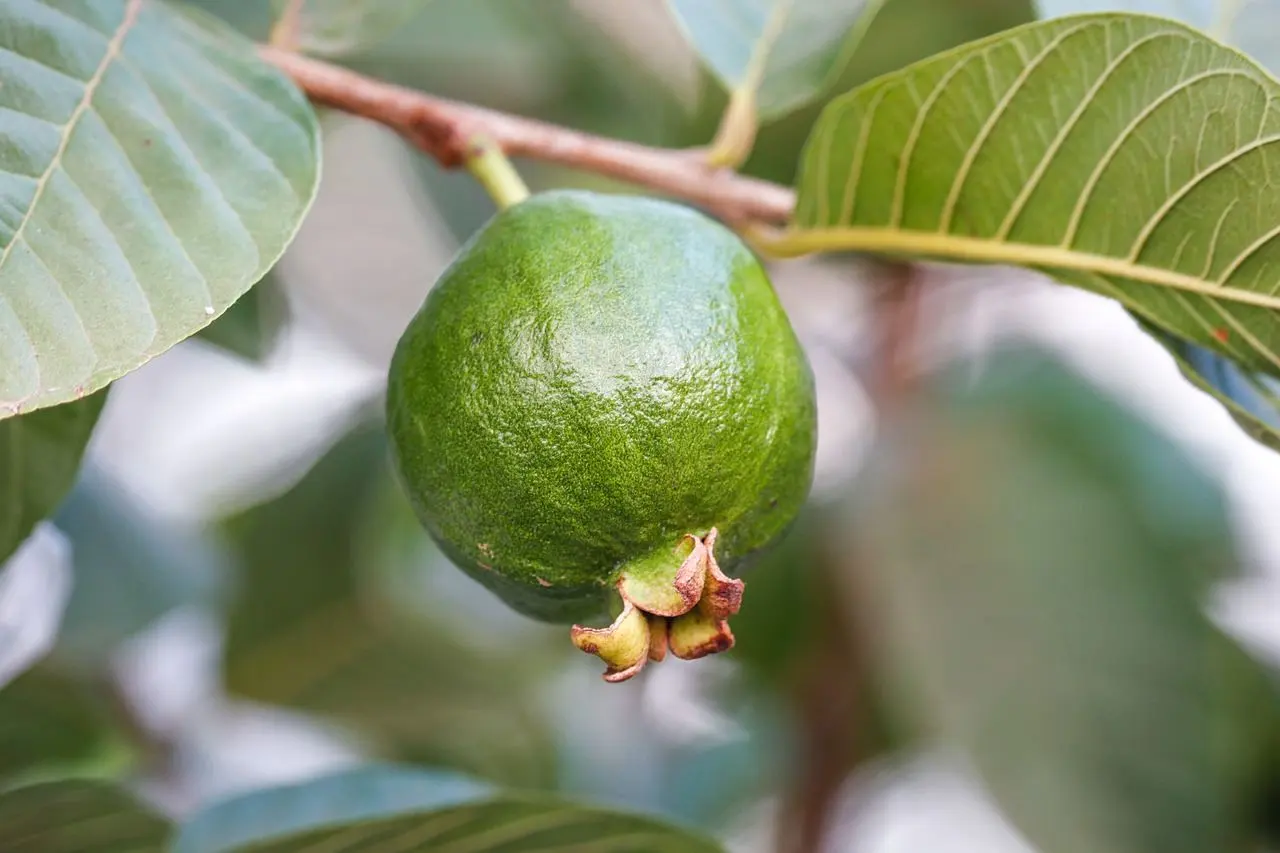
Got a pile of ripe guavas? This guava paste recipe turns them into sliceable goiabada: simmer, strain the seeds, then cook the puree with sugar and lemon until it holds a line.
This page belongs to the guava recipes section of the site, which covers other ways to cook with the fruit.
| Item | Value |
|---|---|
| Fresh guavas | 5 lb. (2.3kg) |
| Sugar | 5 cups |
| Simmering the fruit | 30-40 minutes |
| Cooking the puree with sugar | 35-40 minutes |
| Yield | 2 pounds (900g) |
| Fridge storage | Up to 3 months |
These figures come from the Yummy Addiction recipe. Quantities and timings can change, so check the source before you rely on them.
What goiabada is and where it comes from
According to the Wikipedia entry on goiabada, it is a conserve made of red guavas and sugar. English speakers usually call it guava paste or guava cheese, and Spanish speakers use names such as pasta de guayaba, bocadillo or guayabate.
The same entry traces it to colonial Brazil, where guavas stood in for the quinces used to make quince cheese. It adds that in rural Brazil the paste is still commonly made at home for family use or sale.
Close relatives turn up in other places:
- The Colombian bocadillo is made from guava too, but with more sugar.
- In Goa, India, a former Portuguese colony, the paste is called perad and is cut into diamond-shaped pieces.
- In Portugal it fills the rolled pastry known as bolo de rosas.
Texture is the main variable. Wikipedia notes that the type of guava, the proportion of sugar, the amount of water and the cooking process all shape the result, from a spoonable paste to a slab that is hard to slice.
Ingredients for homemade guava paste
The recipe at Yummy Addiction needs only four things:
- 5 lb. (2.3kg) of fresh guavas, with pink-fleshed fruit recommended
- 2 cups of water
- A large lemon, juiced and zested
- 5 cups of sugar
That quantity makes about 2 pounds (900g) of paste. The same page says a smaller batch is fine, because the recipe halves easily.
Step-by-step method
Here is the method as the source recipe lays it out, in order.
- Rinse and drain the guavas, trim off the ends, and cut the fruit into large chunks. Put the chunks in a pot with the water.
- Bring to a boil, then simmer for 30-40 minutes (per the recipe), stirring often. The fruit is ready when it breaks as you press it against the side of the pot.
- Blend the mixture in a blender that can handle hot liquids, or let it cool first. Strain it through a sieve and discard the seeds; you should have about 8 cups of puree.
- Return the puree to the pot, add the lemon juice and zest, and bring it to a boil.
- Add the sugar in batches, a cup at a time. Cook for about 35-40 minutes (per the recipe), stirring constantly, until the puree holds a line drawn through the bottom of the pot with your spoon.
- Pour the mixture into a parchment-lined pan and let it cool overnight in the fridge. Turn it out and cut it into portions.
The line test in step 5 is the visual cue to watch for. It replaces guesswork, since a pot of hot puree looks loose until it has cooled and set.
Setting, cutting and storing the paste
Cooling overnight is part of the method, not an optional extra. The paste firms up in the pan, so it can be turned out and cut cleanly the next day.
For a homemade batch, the recipe says to wrap the paste in parchment paper and keep it in an airtight container in the fridge, where it lasts up to 3 months. You can read the full instructions on the source page.
A separate guide from Fine Dining Lovers says opened store-bought paste can sit at room temperature, wrapped in plastic or in an airtight container. The two sources differ, so for your own batch the fridge instruction is the one to follow.
If the result is firmer or softer than you wanted, remember the texture range described earlier. Canned paste, by Wikipedia’s description, sits half-way between a thin spread and a hard slab, and slices easily into soft pieces.
Ways to serve guava paste
Guava paste is thicker than jam and can be sliced or cut into chunks, according to Fine Dining Lovers. That makes it easy to use in sweet and savoury dishes alike.
- With cheese: in the Caribbean it is commonly paired with cheese as an appetiser, and in Brazil it meets Minas cheese in a dessert called Romeu e Julieta.
- Pastelitos: in Puerto Rico and Cuba it is combined with puff pastry.
- Cookie filling: the same Fine Dining Lovers guide suggests it for linzer and thumbprint cookies and shortbread sandwiches.
- Baked brie: top a wheel of brie with a few slices of paste and nuts, then wrap it in puff pastry.
- On toast: Wikipedia lists it as a popular breakfast spread.
If you want something looser and spreadable instead, try the guava jam recipe. For a drink made from the same fruit, the guava juice recipe is the place to go.
Frequently asked questions
Can I make a smaller batch?
Show answer
Yes. The source recipe states that it can be cut in half, so a smaller pot works if you only have a few guavas.
Which guavas work best?
Show answer
The recipe suggests pink-fleshed fruit. Wikipedia describes traditional goiabada as made from red guavas, so deeply coloured flesh is a reasonable guide.
How long will the finished paste keep?
Show answer
The recipe gives up to 3 months when the paste is kept wrapped and airtight in the fridge. Opened commercial paste is a different product, so do not assume its storage advice applies.
Is guava paste the same as bocadillo?
Show answer
They are close but not identical. The Colombian bocadillo is also guava-based, yet it contains more sugar than goiabada, per Wikipedia’s entry.
How do I know the paste has cooked long enough?
Show answer
Draw your spoon across the bottom of the pot. If the puree stays parted and holds the line, it has reached the stage the recipe is aiming for.