
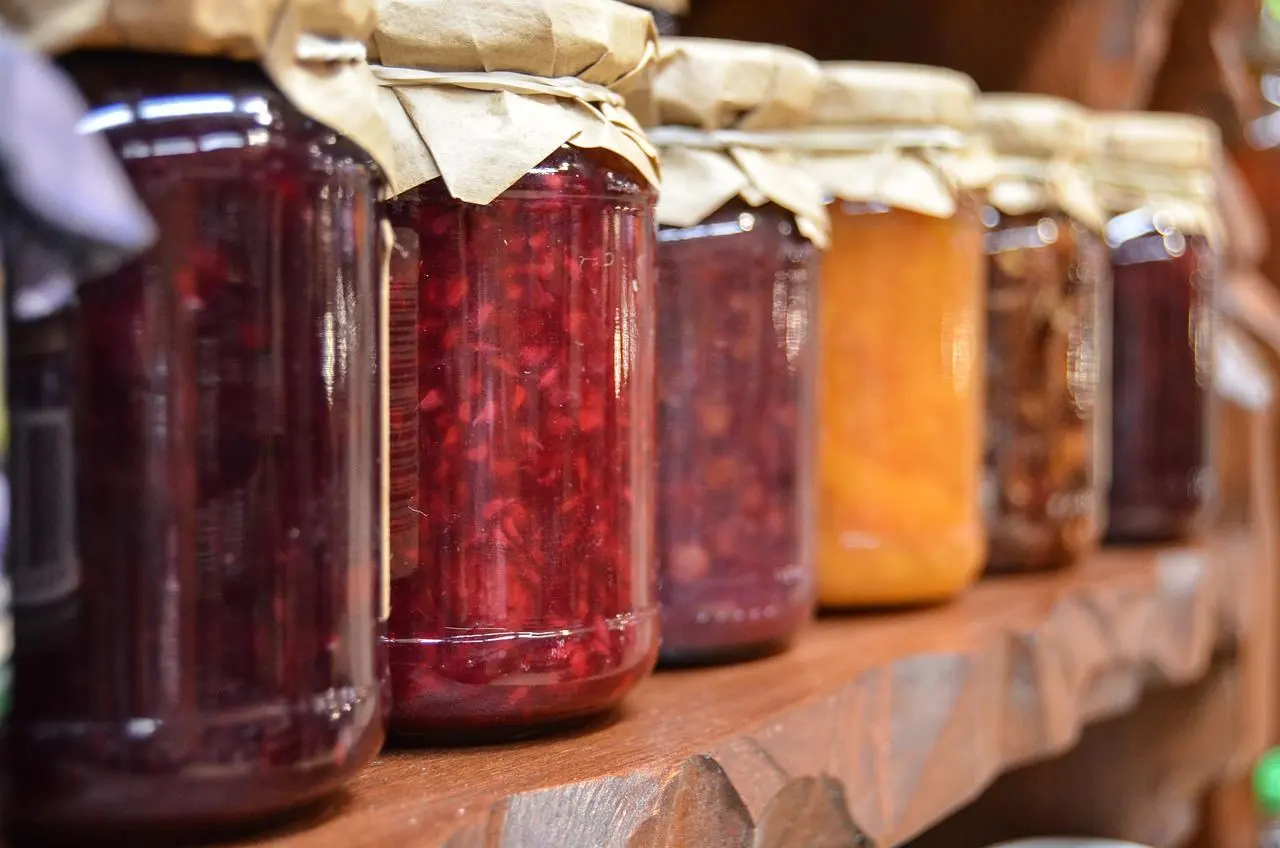
Got a bowl of ripe guavas and no plan? This guava jam recipe cooks seeded pulp with pectin and sweetener, then seals it in jars using a boiling-water canner.
This jam is one of many guava recipes for using up a ripe harvest.
| Item | Value |
|---|---|
| Yield | 5 cups |
| Guava pulp (strained, mashed or pureed) | 4 cups |
| Sugar | ¾ cup up to 2 cups |
| Pectin | 3 teaspoons |
| Boiling-water processing | 10 minutes |
| Shelf life once opened | 3 weeks |
Every figure in the table comes from Pomona’s guava jam recipe. Recipes and guidance can change, so check the source before you rely on them.
Ingredients for guava jam
The recipe follows Pomona’s guava jam, which is built around Pomona’s Universal Pectin. According to that page, the pectin contains no sugar or preservatives and jells reliably with low amounts of any sweetener. The University of Illinois Extension adds that you should make sure to follow tested recipes exactly.
Here is what goes into one batch:
- 4 cups strained, mashed or pureed guava
- 4 teaspoons calcium water (made in the next section)
- ¼ cup bottled lemon or lime juice, if the guava is sweet
- ½ cup up to 1 cup honey, or ¾ cup up to 2 cups sugar
- 3 teaspoons Pomona’s Universal Pectin, mixed with the sweetener
- All amounts come from Pomona’s recipe, which gives the sweetener as a range.
That range is specific to this pectin. NMSU Extension describes jams as mixtures of about 45% fruit and 55% sugar, and it advises you not to try to reduce the sugar in traditional recipes. Too little sugar prevents gelling and may allow yeasts and molds to grow, so do not carry this recipe’s ranges over to other jams.
Prepare the calcium water, jars and guava
Set everything out before you start, because the calcium water has to be ready when you measure the pulp. Check your jars at the same time.
Look closely at each jar. NMSU Extension says to inspect jars carefully for cracks or chips and discard faulty ones, and to use only new lids. It also warns against reusing jars from commercially processed products such as mayonnaise, because they will not withstand the water bath.
- Make the calcium water: combine ½ teaspoon calcium powder (the small packet in the box of pectin) with ½ cup water in a small, clear jar with a lid and shake well, as Pomona’s recipe directs. Refrigerate any extra for later use.
- Prepare the boiling-water canner and heat the jars in simmering water until you need them. Wash the lids and bands and set them aside.
- Option A: peel the guavas and cut them into pieces, or halve them and scoop out the pulp. Simmer with a little water, stirring now and then, until soft, then strain through a food mill or sieve.
- Option B: halve the guavas and scoop out the seedy center, then scoop out the rest of the pulp. Mash it if soft, or puree it in a blender or food processor if firm.
- Measure the pulp into a saucepan.
How to cook and seal the jam
The order matters here: the pectin-sweetener mixture goes in only after the fruit reaches a full boil. Stir the pectin powder thoroughly into the sweetener beforehand, as Pomona’s method directs.
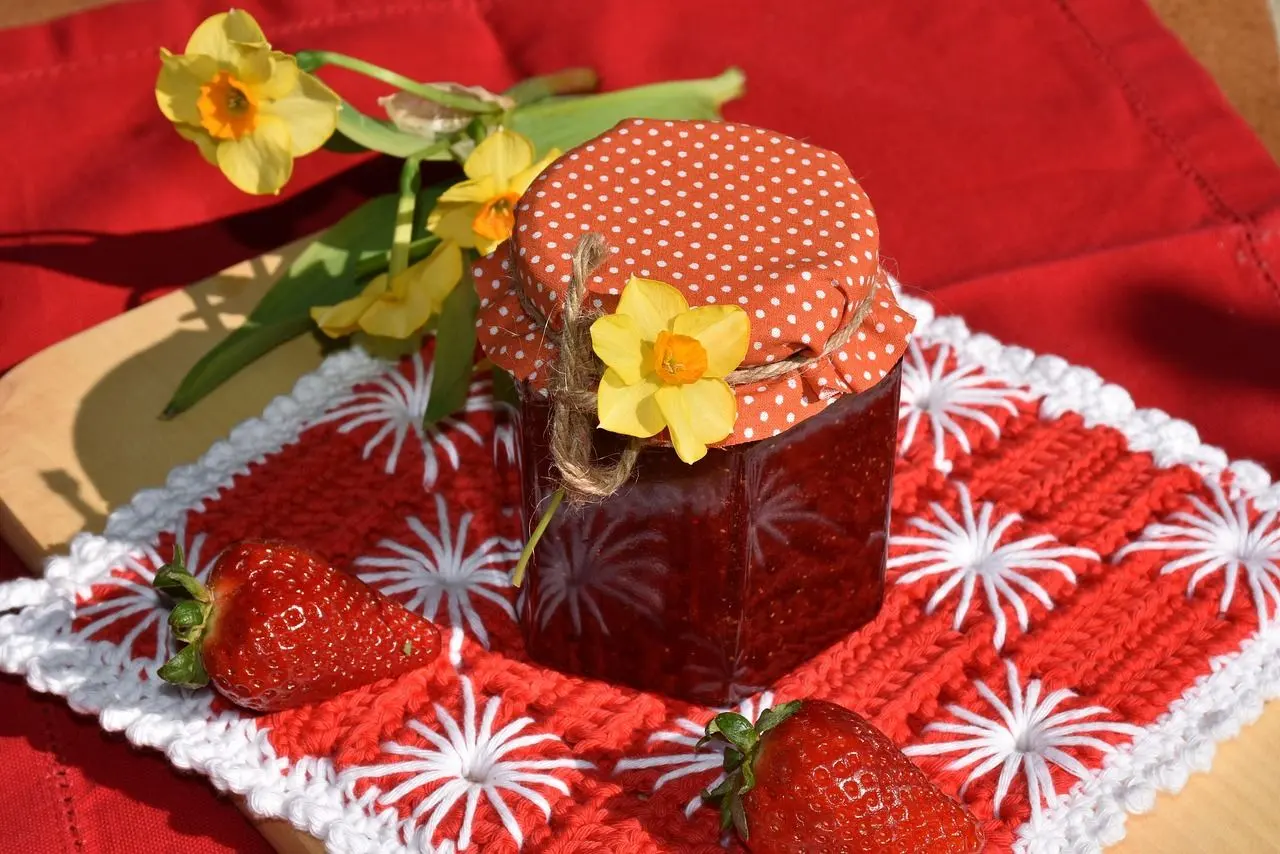
- Add the calcium water and the lemon or lime juice, if needed, to the measured pulp and mix well.
- Bring the fruit mixture to a full boil, then add the pectin-sweetener mixture. Stir vigorously for 1 to 2 minutes to dissolve the pectin while the jam comes back up to a boil, as Pomona’s recipe says.
- Once the jam returns to a full boil, remove it from the heat.
- Fill the hot jars, leaving ¼-inch headspace, which matches the Illinois Extension guidance. Remove trapped air bubbles, wipe the rims, and fit the lids and bands, tightening the bands only to “fingertip tight”.
- Set the jars upright in the canner, not touching each other or the sides, and covered with at least 1-2 inches of water, per Pomona.
- Cover the canner, bring it to a rolling boil, and boil for 10 minutes, adding 1 minute for every 1000 feet above sea level. Then turn off the heat and let the canner and jars sit for 5 minutes before lifting the jars out, as the recipe specifies.
- Let the jars cool undisturbed for 12-24 hours, then confirm they have sealed and store them properly, following the same recipe.
Tips for a good set and safe storage
These points come from extension guidance on jams and jellies.
- Match the pectin. NMSU Extension states that the liquid and powder forms are not interchangeable, so stay with the pectin the recipe names.
- Keep batches small. Illinois Extension says to make small batches at a time and not to double a tested recipe.
- Use the jar sizes the recipe gives. The same page says to follow tested recipe directions and use only the jar sizes the recipe specifies.
- Give the set time. Its troubleshooting chart notes that some fruits take up to 2 weeks to set up completely, so wait before judging a loose jar.
- Discard suspect jars. If bubbles are moving inside a jar, the chart says not to use it.
For storage, Illinois Extension recommends a dark, dry, cool location for processed jars and refrigeration after opening.
Swaps and ways to serve the jam
A reply on Pomona’s recipe page says you may use the recipe with pineapple guava or strawberry guava, using 4 cups mashed fruit total for each recipe. The same reply recommends using the lemon juice for brightness. Reader replies are not part of the recipe itself, so treat swaps as informal.
Fresh guava also works in a tropical fruit salad recipe, so you can keep some fruit raw while the rest becomes jam. If you want another way to preserve the fruit, try the guava paste recipe.
Frequently asked questions
Can I make guava jam from frozen pulp?
Show answer
A reply on Pomona’s recipe page says frozen guava should work just fine, as long as you let it thaw before preparing and measuring.
How long does homemade guava jam keep?
Show answer
Sealed, processed jars should be used within one year, according to Illinois Extension. Once a jar is open, Pomona’s recipe says the jam lasts 3 weeks.
Why do the seeds have to come out?
Show answer
The recipe calls the seeds very hard and says they must be removed. That is why one method strains the softened pulp through a food mill or sieve, while the other scoops out the seedy center first. Details are on Pomona’s page.
When do I add lemon or lime juice?
Show answer
The ingredient list flags the bottled juice for sweet guava, and the method includes it only if needed. WSU Extension explains that acid is needed in fruit spreads for flavor and gel formation, and that with too little acid the product may not gel.